
Last updated November 24, 2026
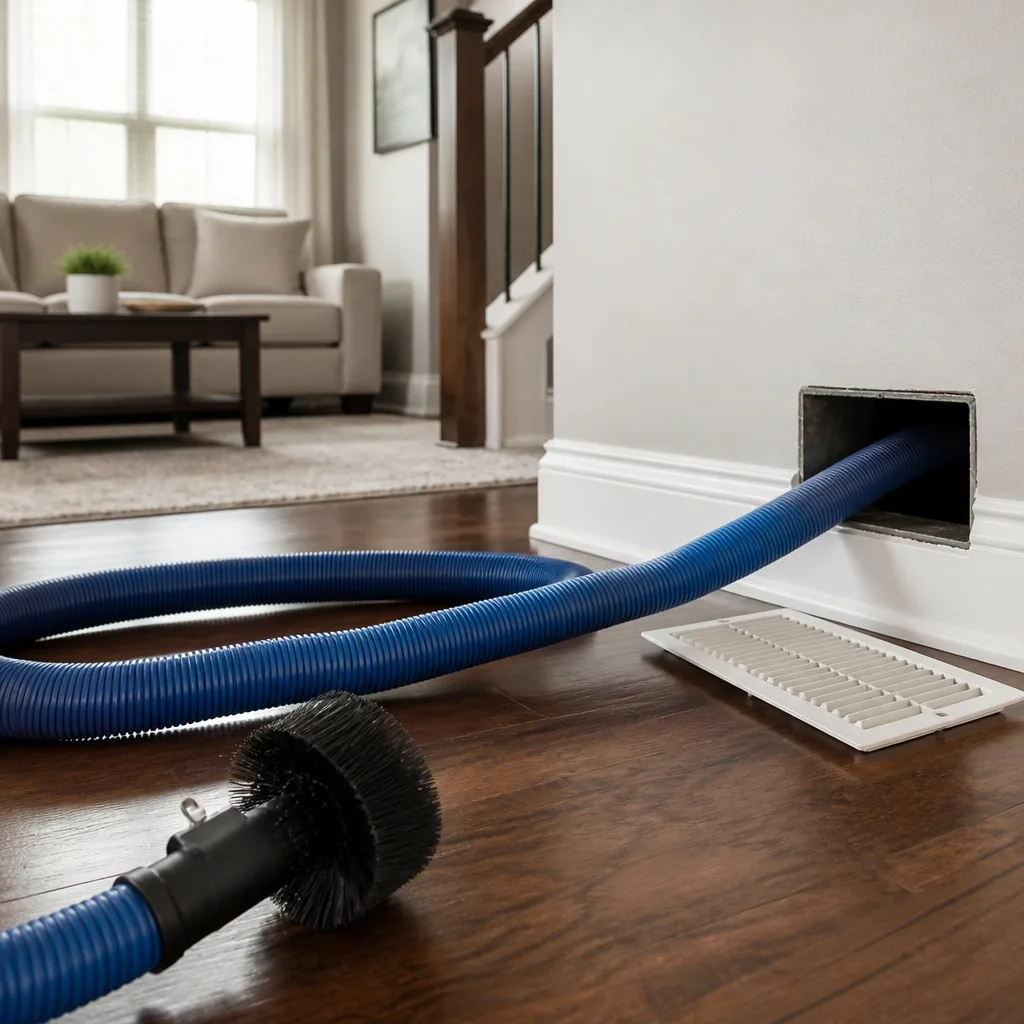 Whole-home duct cleaning
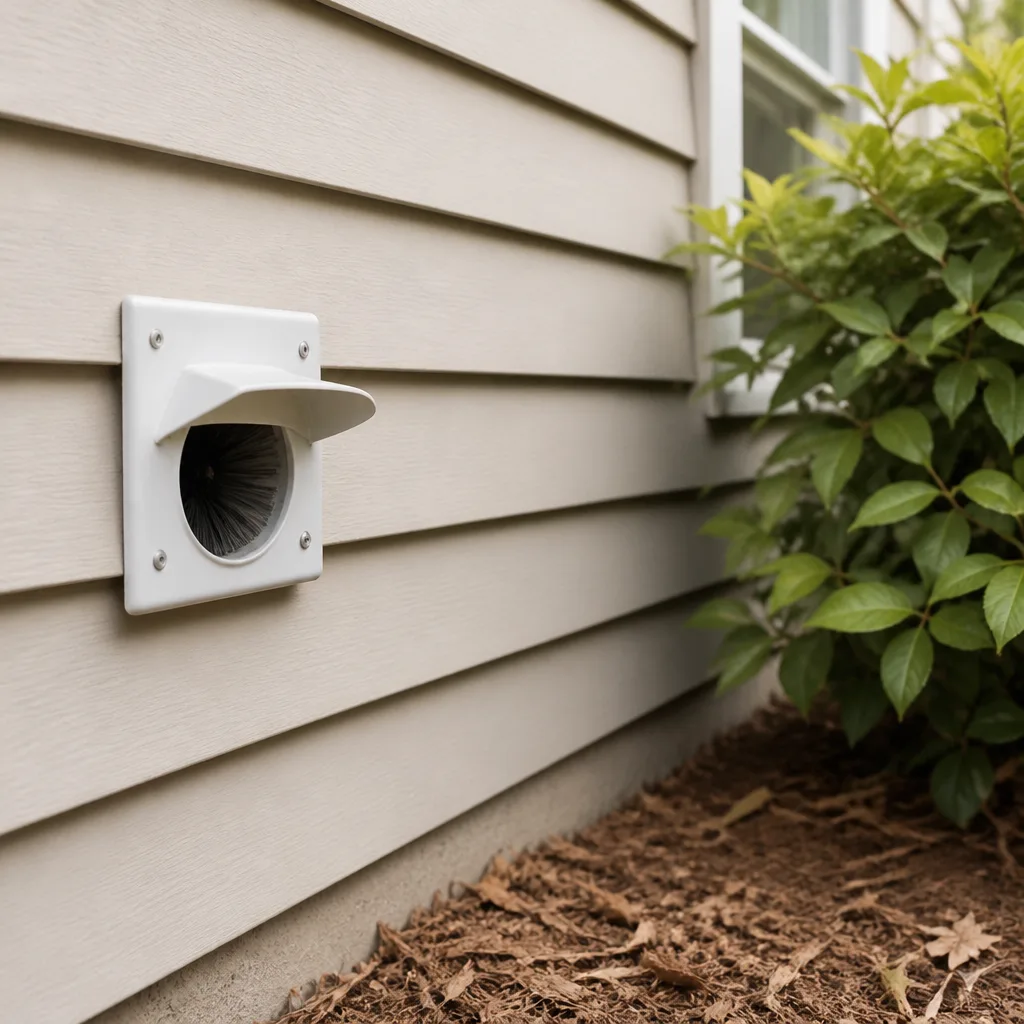 Dryer vent cleaning
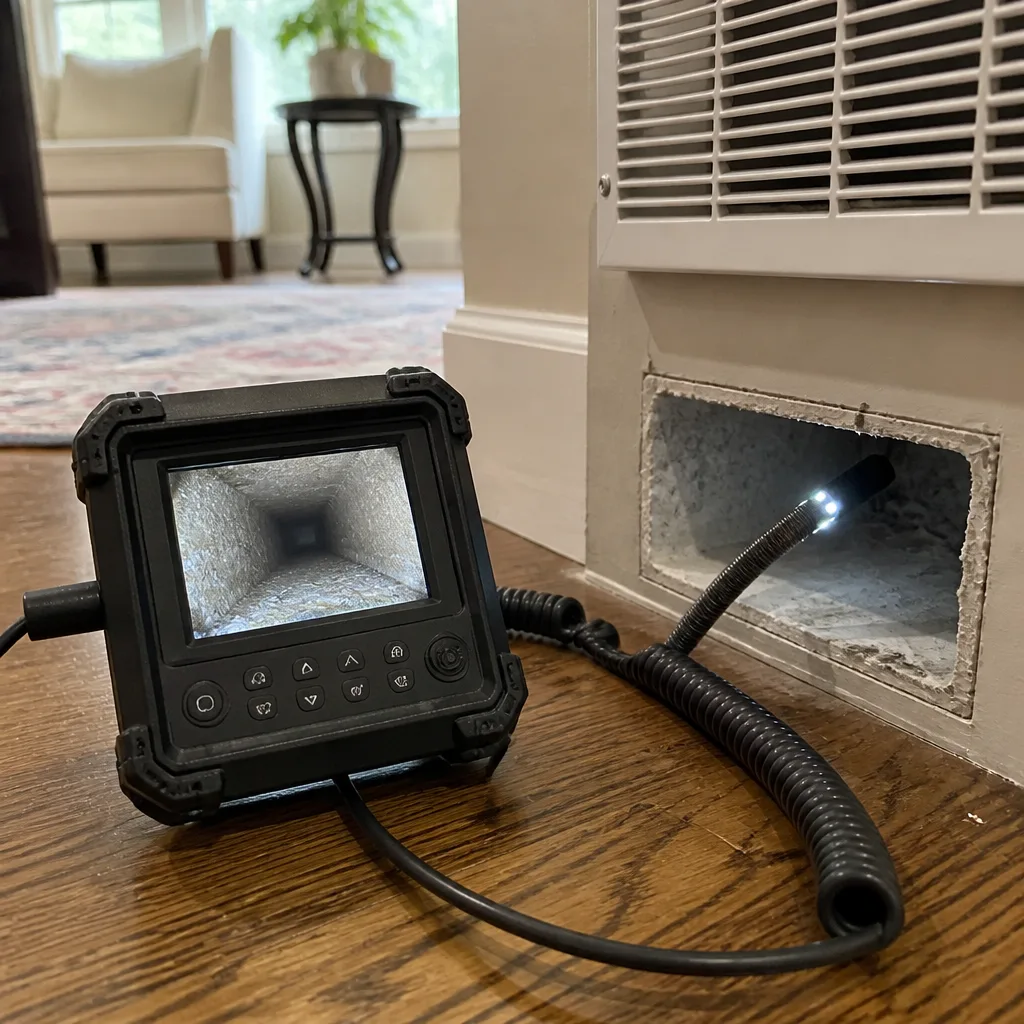 Camera inspection
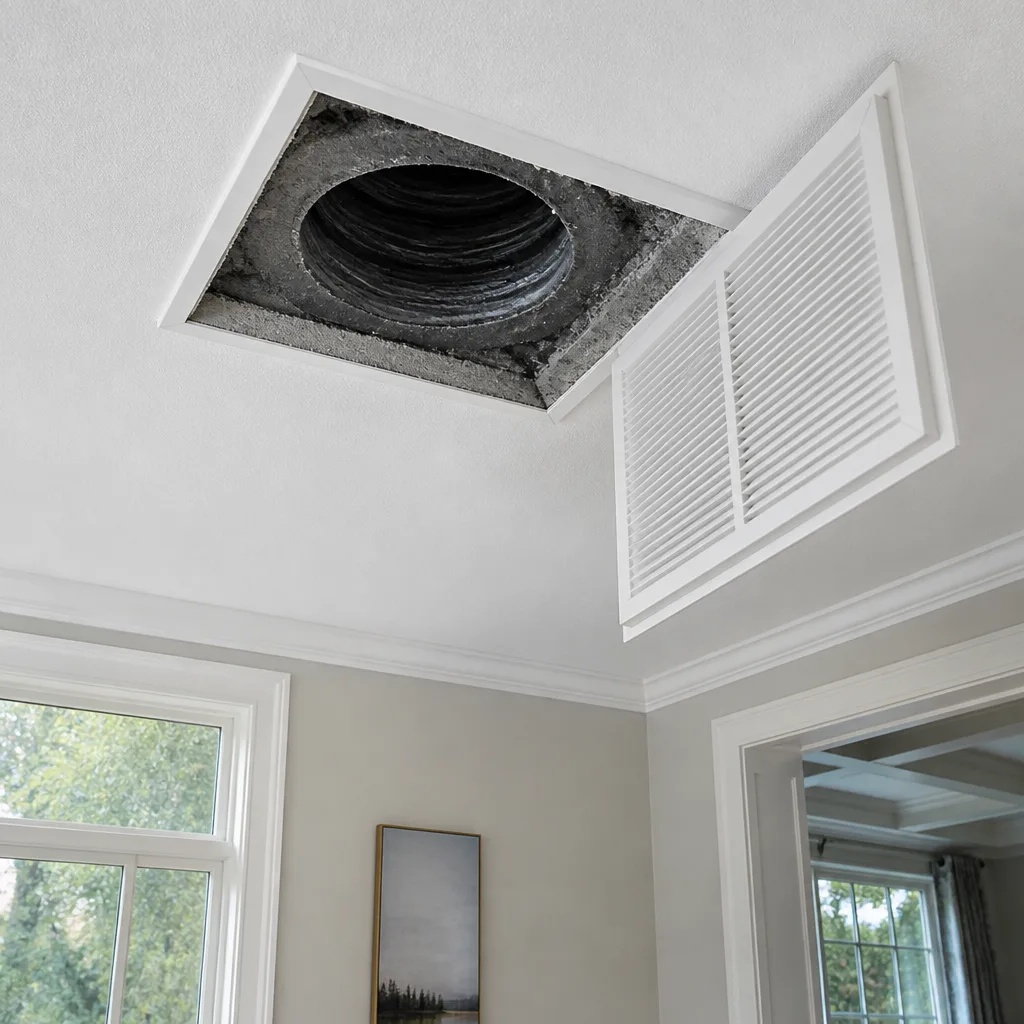 Sanitizing & deodorizing
Whole-system duct and dryer vent check with before-and-after photos - you see exactly what came out of your vents
That "$99 whole-house special" is a bait ad - the real number appears once they are in your hallway, or the "clean" is a shop-vac at the register. We photograph the inside of your ducts before and after instead.
Air Duct Cleaning Maintenance Checklist for Seven Hills Homeowners
Replacing your filter on schedule feels like maintenance, but it’s really just one variable. A filter that loaded fast and collapsed inward last month pushed debris past the media and into the trunk line, and nothing about that shows from the hallway register. The part of your system you can see is the least informative part of it. What actually protects a house in Seven Hills is a monitoring cadence: certain checks you do with your eyes, some that need a flashlight and a camera, and some that only make sense once a professional opens the system. This guide lays out that cadence month by month and season by season, and gives you the specific numbers to log so you can tell the difference between normal dust and a system that’s telling you something changed.
Quick Answer
A workable air duct maintenance checklist runs on three layers: monthly eyes-only checks (filter load, register dust, airflow feel), seasonal inspections with a flashlight and phone camera (trunk lines, coil access, return grilles), and a professional cleaning and inspection every three to five years, sooner if you’ve had a renovation, new construction settling, or a wildfire smoke event. The point of the checklist isn’t a cleaning date. It’s a written record of filter loading speed, room-by-room airflow, and dust reappearance so you catch a problem in month two instead of year four.
Styles & brands we work with
- Whole-home duct cleaning
- Dryer vent cleaning
- Camera inspection
- Sanitizing & deodorizing
Table of Contents
- The Three Layers of Duct Maintenance
- Monthly Checks: Eyes Only
- Seasonal Checks: Flashlight and Camera
- The Annual Walkthrough and What to Log
- The Four Indicators Worth Tracking Over Time
- What Resets the Maintenance Clock
- Filter MERV Ratings and Why Higher Isn’t Always Better
- What to Document Before and After a Professional Clean
The Three Layers of Duct Maintenance
Most homeowners treat duct care as a single event, something you schedule and forget. That model fails because ductwork doesn’t move in a straight line. It responds to what your house is doing: a new roof, a kitchen remodel, a dry winter, a summer of smoke drifting east off the mountains. A monitoring system responds to those changes. A schedule doesn’t.
Here’s how we break the work into layers, and why each one matters.
- Layer one: eyes only. Five minutes a month. Filter condition, visible dust on supply registers, and whether airflow at each vent feels the same as last month. No tools. This is your early warning system.
- Layer two: flashlight and camera. Twice a year. You look into return grilles, check the accessible trunk near the air handler, and photograph what you see with your phone. Comparing photos across seasons tells you whether dust is accumulating or holding steady.
- Layer three: professional service. Every three to five years, or on a trigger event. This is where equipment matters, because a shop vac can’t reach what a Rotobrush or Nikro system reaches, and it doesn’t capture what it loosens.
At Air Duct Cleaning Seven Hills, we run all three of these for homeowners who’d rather not guess. The cleaning is one service, but the value is in the baseline: knowing what normal looks like in your house so a change stands out. Our technicians have up to 10 years of experience, and most of what they do on an inspection is compare what they see against what they’d expect for a home of a certain age, layout, and filtration setup.
The layers build on each other. Skip layer one and you’ll miss the clue that would’ve told you to schedule layer three. Skip layer two and the professional arrives with no history to work from, which means less information for everyone.
Monthly Checks: Eyes Only
The monthly pass takes about five minutes and needs no tools. Do it on the same day each month so the interval between observations stays consistent. Grab your phone and note what you find, even if nothing looks off. A record of “nothing changed” is data too.
Work through these in order:
- Pull the filter and look at it against a light. Note how much of the surface is greyed out. If it’s more than half loaded after a month, that’s a fast loader and worth logging separately.
- Check the filter seat. Is it sitting flat, or has it bowed inward? A filter that’s collapsed or been sucked out of position let debris bypass it. That’s the case that sends particles straight into the trunk line.
- Walk to every supply register and hold your hand to it. Write down “strong,” “medium,” or “weak” for each room. It’s crude, but it’s consistent, and consistency is what makes the log useful.
- Look at the register face. A thin film of dust is normal. A visible dark line building along the louvers in one month is not, and it’s worth a note.
- Sniff. Musty or dusty odors at a register when the system runs point to moisture or biological growth somewhere in the ductwork, and that needs a professional look, not more airflow.
We’ve seen homeowners keep this log for a year and discover their second-floor rooms had been running on lower airflow for months without anyone noticing, because nobody had ever established what “normal” felt like. The log is what surfaces that.
One clarification on filters: replace by loading, not by the calendar. A manufacturer’s “every 90 days” is a starting point. If your monthly check shows 70 percent loading at week four, your house needs a shorter interval. If it’s barely greyed at month three, you can stretch it. The interval is a variable, and your log tells you what your house actually needs.
Seasonal Checks: Flashlight and Camera
Twice a year, once in spring and once in fall, spend a little more time. This layer needs a flashlight and your phone camera. You’re not cleaning anything. You’re looking and photographing so you can compare later.
Here’s the seasonal routine:
- Photograph every return grille before you touch anything. Same angle, same distance, so the photos line up month to month.
- Remove the return grille cover and shine the flashlight into the duct. Look for dust accumulation on the interior walls. Note whether it’s a light film or a thicker coat.
- Find the accessible trunk near the air handler and photograph the interior if you can see it. This is your best gauge of what’s moving through the system, because everything passes through here.
- Check the condensate line and the area around the coil for standing water or staining. Moisture in a duct system is the root cause behind most odor complaints, and it’s cheap to catch early.
- Photograph the outdoor unit pads and any accessible flexible duct connections in the attic or crawlspace. A disconnected or torn duct is common and easy to spot visually.
- Save the photos in one album labeled with the date. You’ll want them side by side when you compare next season.
Spring matters in Seven Hills because that’s when pollen and the first warm-weather dust arrive. Fall matters because heating season starts and you’ll see whether the ductwork has been holding dust through the dry months. Both seasons are when airflow changes get noticed.
If you find a disconnected duct, don’t tape it and move on. A sealed connection is the difference between air going where it should and air going into the attic. We handle duct repair and sealing as one of our five services, which matters because cleaning a system with an open connection just moves dust around the house twice.
What you can’t inspect from the outside is what’s happening inside the runs behind walls and above ceilings. That’s where a professional camera on a scope does work you can’t do. Our inspections use professional-grade equipment to see and document what’s in there. Air duct cleaning starts with knowing what you’re looking at, and the seasonal photos you take make the professional inspection far more efficient because they give us a comparison point.
The Annual Walkthrough and What to Log
Once a year, sit down with your monthly notes and your seasonal photos and build a summary. This takes maybe twenty minutes and it’s the single most useful thing you can do for your system’s long-term health. The goal is a one-page snapshot you can compare against next year.
Log these six things:
- Filter loading rate. How many weeks until the filter is roughly half loaded. One number.
- Filter replacement dates. The actual dates you replaced it, not the plan.
- Room-by-room airflow ratings. Your strong/medium/weak calls from each room, every month.
- Dust reappearance timing. How long after cleaning a register did visible dust return. Days, weeks, or months.
- Odor notes. Any musty or dusty smell and where you noticed it.
- Trigger events. Renovation, roof work, wildfire smoke days, new flooring, a new pet. Anything that changed the dust load in your house that year.
Bring that page to your next professional appointment. Any technician worth the visit will use it. For example, if your log shows airflow was balanced in March and one upstairs room dropped to weak by November, that’s a signal the technician should check a specific run for a leak or obstruction rather than just clean and go. Recorded history turns a general cleaning into a targeted one.
At Air Duct Cleaning Seven Hills, our technicians have up to 10 years of experience, and a lot of what they get good at is exactly this: reading a homeowner’s log and knowing which runs to focus on. Some homes show an obvious pattern. Others are subtler, and the log is what makes them legible. Air Duct Cleaning Seven Hills is the place to start if you want that baseline established properly the first time.
The Four Indicators Worth Tracking Over Time
Not everything is worth writing down. These four are. Each one changes for a reason, and the pattern across months tells you more than any single reading.
Filter Loading Speed
How fast your filter loads is essentially a measure of how much particulate is entering the return side. A filter that used to last three months and now loads in four weeks is telling you that something upstream changed: recent renovation, a duct leak pulling from an unconditioned space, a pet, or a filter that isn’t seating properly. Loading speed is the earliest, cheapest indicator you’ve got.
Visible Dust Reappearance on Registers
After a professional cleaning and a thorough register wipe-down, note the date. Check the registers weekly without touching them. The moment a uniform grey film returns gives you a hardness reading on your house’s dust load. A dusty home will show it in a week or two. A well-filtered home might go a full season. If dust comes back faster than it used to, that’s a change to investigate.
Airflow Balance Room to Room
Your hand-to-the-vent reading from each room, done the same way each month, becomes a map. You’re looking for asymmetry. If five rooms feel strong and one feels weak, you have a distribution problem: a leak, a blocked run, or a damper issue. If all the rooms fade a little, that’s more likely a filter loading faster than the interval. If all of them weaken at once with a fresh filter, that points to something in the air handler or the trunk.
Musty or Dusty Odors at Specific Vents
Odor is the canary. A musty smell at one register and not others points to moisture in that specific run, possibly a disconnected duct in a humid attic space or condensation on a cold pipe. A general dusty smell throughout points to accumulated deposits in the trunk. Either way, odor is the indicator that should send you to a professional, not to a scented air freshener.
Log all four in a table with one column per month. The comparison is what makes the information actionable.
What Resets the Maintenance Clock
Your regular interval is three to five years, but trigger events reset it to “sooner.” Not because the ducts got worse overnight, but because a specific event changed what’s inside them. Here’s how to think about each one.
New Construction Settling
A new home goes through a settling period in the first two to three years as framing, drywall, and concrete finish curing and shifting. That settling releases fine dust and construction debris into the air, and some of it ends up inside the duct system. If you moved into a newly built home in Seven Hills, schedule an inspection within the first year and plan to re-inspect after settling settles. It’s a different cleaning profile from an established home, because there’s likely drywall dust and construction material in the ductwork that a standard residential cleaning might not anticipate.
Renovation Dust
Any renovation that involves opening walls or laying new flooring generates enormous fine particulate, even if you close the doors and hang plastic. The HVAC system pulls return air from around the house, and some of that fine dust gets into the return side. If the project runs a month or more, plan a professional cleaning after the job and after the final cleaning pass. For short projects, extend the interval but don’t skip the seasonal inspection.
Wildfire Smoke Events
Eastern Colorado gets smoke episodes when fires burn west of the mountains and the wind carries it east. Those events are a reset, but not the obvious one. High-MERV filters do a good job capturing smoke particles, but they load fast during a smoke event and if they collapse or the system is bypassing air around the media, the particles go into the ducts. If you experience a sustained smoke period in Seven Hills, check your filter frequently during the event, replace it as soon as it starts loading, and schedule a professional inspection afterward to see whether any smoke residue reached the duct interior. HVAC cleaning is the right service for cleaning the air handler and coil area where smoke residue collects.
Pets and New Occupants
Adding a dog or cat to the home, or moving into a home with previous pets, both raise the particulate load. The same for a family member with new allergies moving in. Treat this as a reset: fresh inspection and a professional cleaning if it’s been more than a couple of years.
Every one of these triggers the same three-step response: run the seasonal check within a month, replace filters during the event, and schedule a professional inspection after.
Filter MERV Ratings and Why Higher Isn’t Always Better
The instinct when you see smoke or dust is to buy the highest MERV filter you can find. That instinct often makes duct contamination worse, not better. Here’s why.
MERV is a scale of how effectively a filter captures particles by size. A higher MERV catches smaller particles, including smoke and fine dust. That’s the good side. The bad side is that a higher-MERV filter is also more restrictive. It creates more static pressure resistance, and most residential blowers in Seven Hills homes were designed for a specific pressure range. Push past that range and one of three things happens.
- The blower works harder and moves less air, which drops efficiency and can strain the motor.
- The system can trip safety limits or short-cycle.
- The filter, if it wasn’t installed with the right housing depth, can buckle or be pulled out of its seat, opening a bypass that lets unfiltered air into the duct trunk.
That last point is the one that quietly causes duct contamination. A filter that’s loaded and then bypassed passes everything it captured right back into the system. So a “better” filter in the wrong housing can actually send more debris into your ducts than a modest one seated correctly.
Practical guidance for a typical Seven Hills home on standard residential ductwork:
- MERV 8 to MERV 11 is a sensible range for most homes, balancing filtration with pressure cost.
- MERV 13 and up is appropriate if your air handler is rated for it. Check the manufacturer’s specification, don’t guess.
- Never size up a filter without confirming the blower can handle the added resistance.
- Replacement interval shortens as MERV rises. A high-MERV filter loads faster and reaches restriction sooner.
- Seat the filter flat. The filter seat matters more than the MERV number.
For homes where filtration needs to go beyond MERV, we work with Honeywell and Aprilaire products, both of which include filtration and humidity control options that are designed for a residential system rather than added on top of it. The point isn’t to sell a filter. It’s to get the right filtration without creating a bypass.
What to Document Before and After a Professional Clean
The single biggest reason homeowners can’t tell whether a professional cleaning did anything is that they have no baseline. Before photos, an inventory of what was found, and after photos create a comparison that answers the question. Here’s what to document.
Before the Appointment
- Photograph every supply and return register in the same framing, so before and after pictures line up.
- Write down your airflow ratings room by room from your monthly log. This is your baseline for comparison.
- Write down any odors and which vents they’re coming from.
- Note the filter brand, MERV rating, and install date.
- Ask the technician to do a pre-cleaning camera inspection of the trunk and at least two of the longer runs, and to describe what’s found. Any professional should be able to do this.
After the Appointment
- Photograph the same registers in the same framing.
- Ask for the technician’s notes on what was removed and any issues found: disconnected joints, tears, biological growth, or heavy deposits in a specific run.
- Re-rate airflow room to room and compare against the pre-appointment baseline.
- Get a written summary of the duct repair or sealing work performed, if any. A cleaning that opens up a leaking run without sealing it leaves the problem in place.
- Store the before/after photos and the summary in one folder alongside your annual log. You’ll want it for your next inspection.
We use Abatement Technologies air filtration during every job to capture what’s dislodged rather than recirculating it. That’s a step most residential cleanings skip, and it’s one of the reasons before-and-after photos show a real difference. On the sanitizing side, Guardsman-grade treatments are available for duct interiors after cleaning, which addresses odor sources and biological growth that cleaning alone doesn’t remove. If your cleaning identifies a duct repair need, we also handle the repair and sealing so you don’t need to call a second contractor to fix what the first one uncovered.
For homes with heavy lint buildup around the laundry, dryers are worth noting in the same appointment. Dryer vent cleaning is one of our five services and it addresses a fire risk that gets ignored when duct cleaning is treated as an air-quality-only job.
Common Mistakes to Avoid
- Replacing the filter on the calendar instead of by loading. A house with pets or heavy dust loads reaches half-loaded in weeks, not months. The log tells you what your filter actually needs, not the box.
- Buying the highest MERV filter without checking the blower rating. An over-restrictive filter on an under-sized blower either strains the motor or bypasses. Match the MERV to the manufacturer’s specification for your equipment, not to the highest number on the shelf.
- Ignoring a musty smell at one vent. Odor at a single register is the earliest sign of moisture in one run. Waiting for it to spread turns a small repair into a larger cleaning project.
- Cleaning the ducts without sealing what gets found. A disconnected or torn duct is common, and cleaning a system with an open joint just redistributes dust. Repair and sealing belong in the same service visit as the cleaning.
- Skipping the pre-cleaning camera inspection. Without a camera look and photos before the work starts, you can’t verify anything was actually done. Ask for it every time.
- Treating a wildfire smoke event as a non-event. Smoke days are a trigger, not just an inconvenience. Check the filter during the event, and schedule an inspection after.
- Cleaning ducts and ignoring the dryer vent. Lint accumulation in the dryer vent is a separate risk from duct dust, and it’s a leading cause of house fires. Both belong on the same maintenance calendar.
See the difference
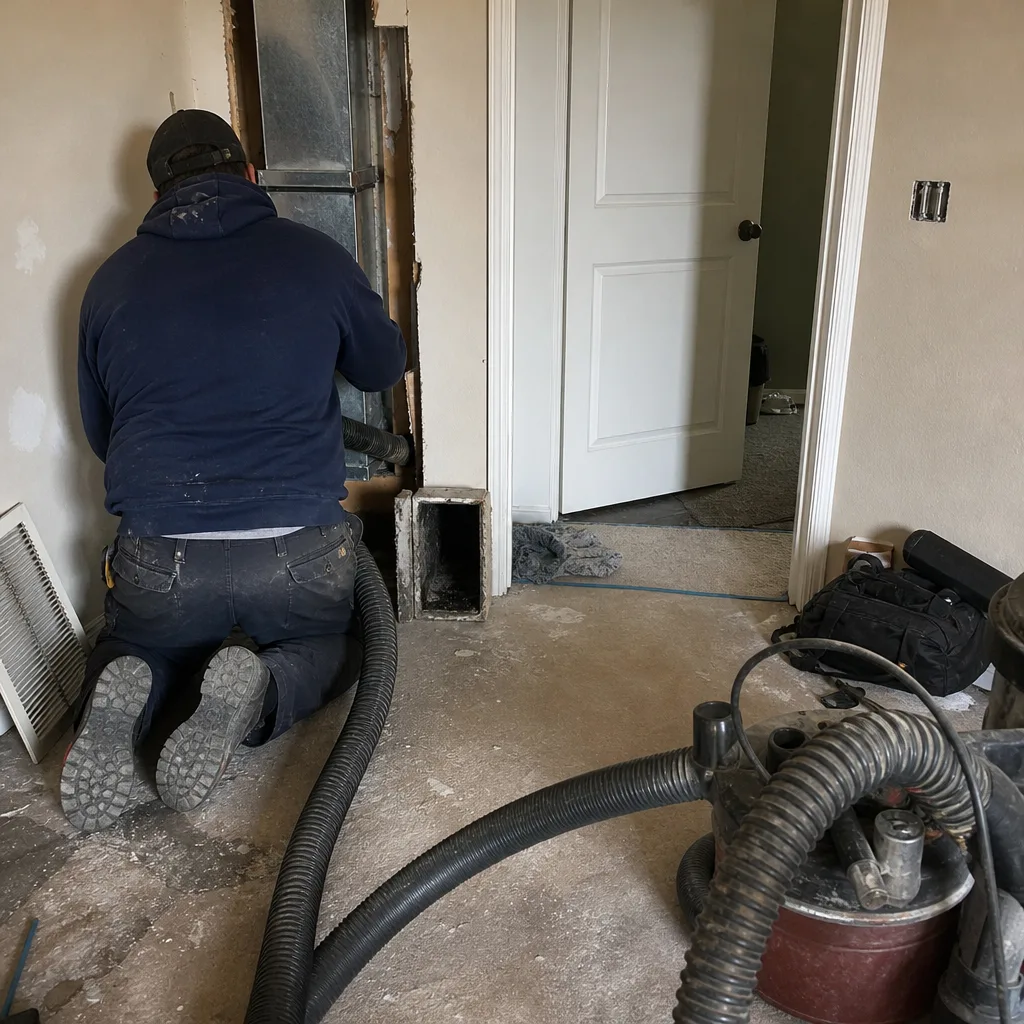 Before
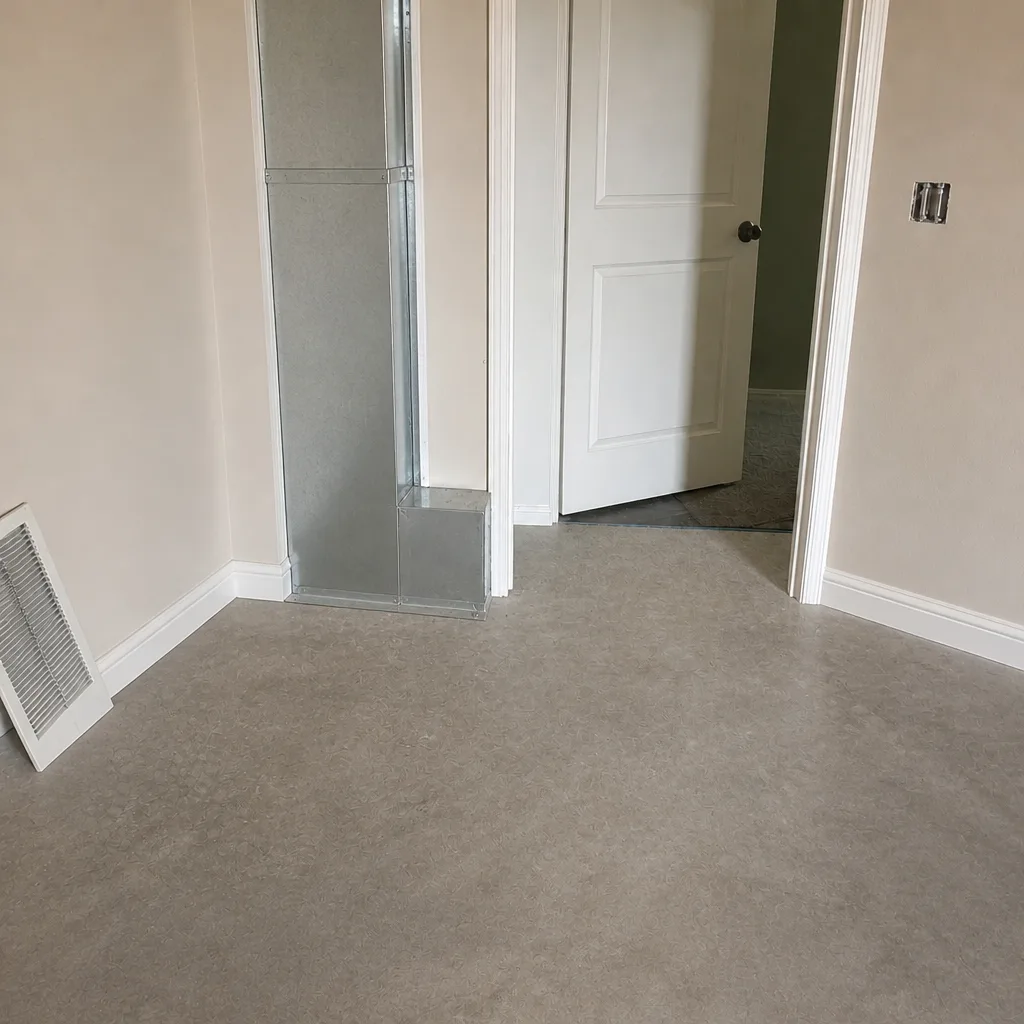 After
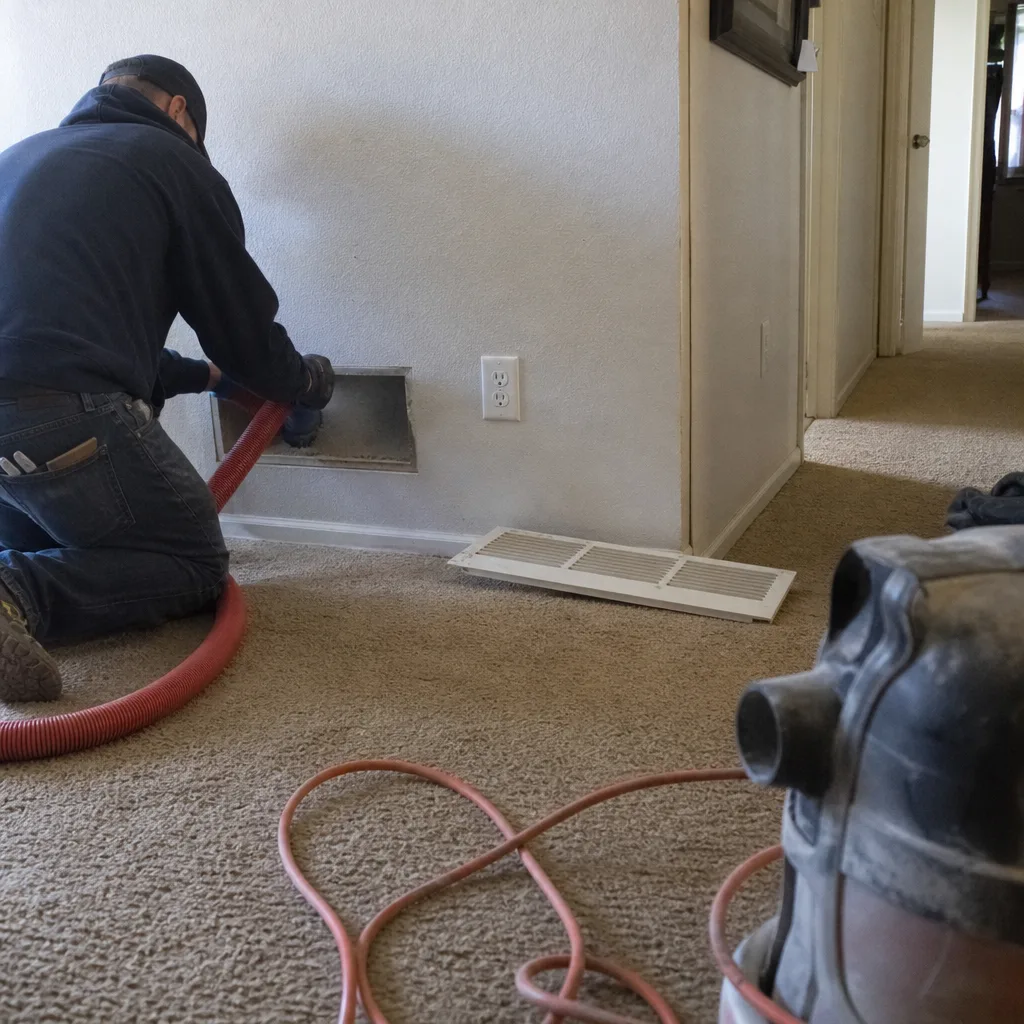 Before
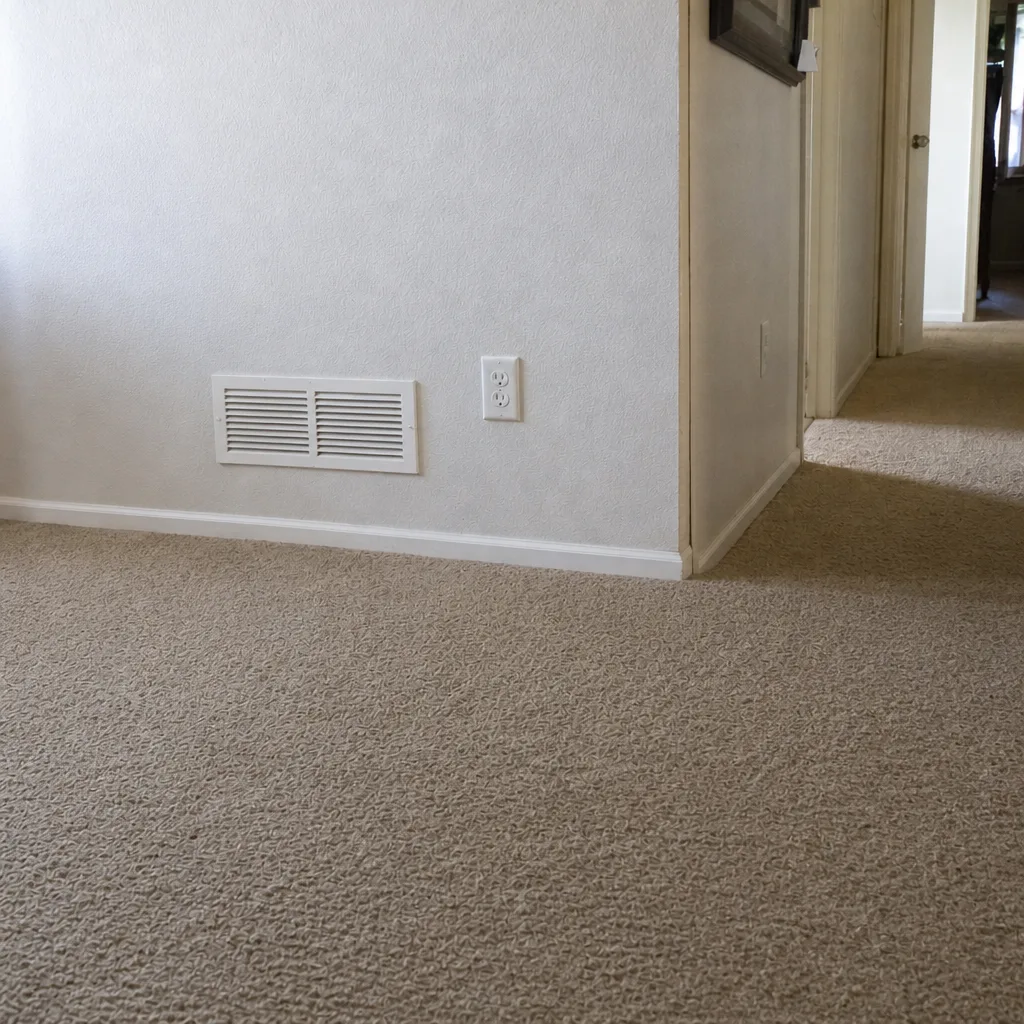 After
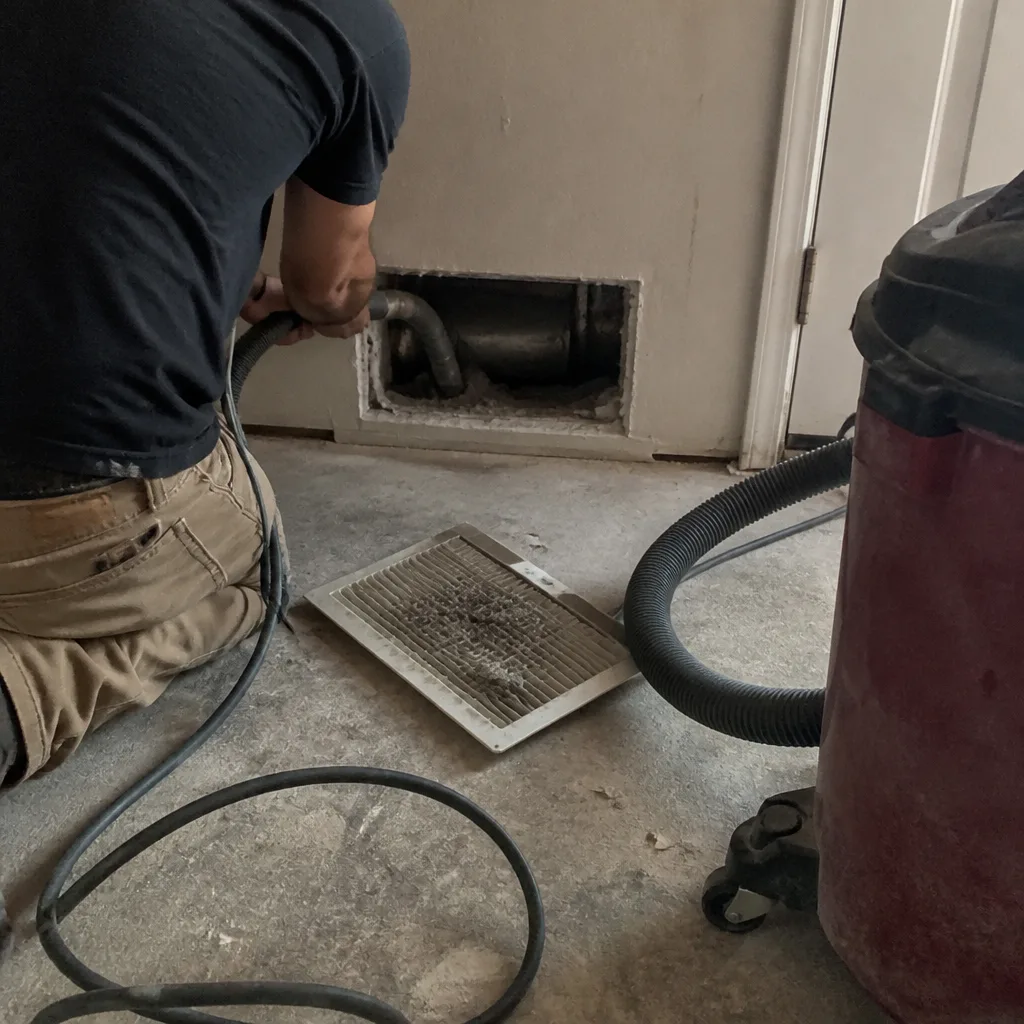 Before
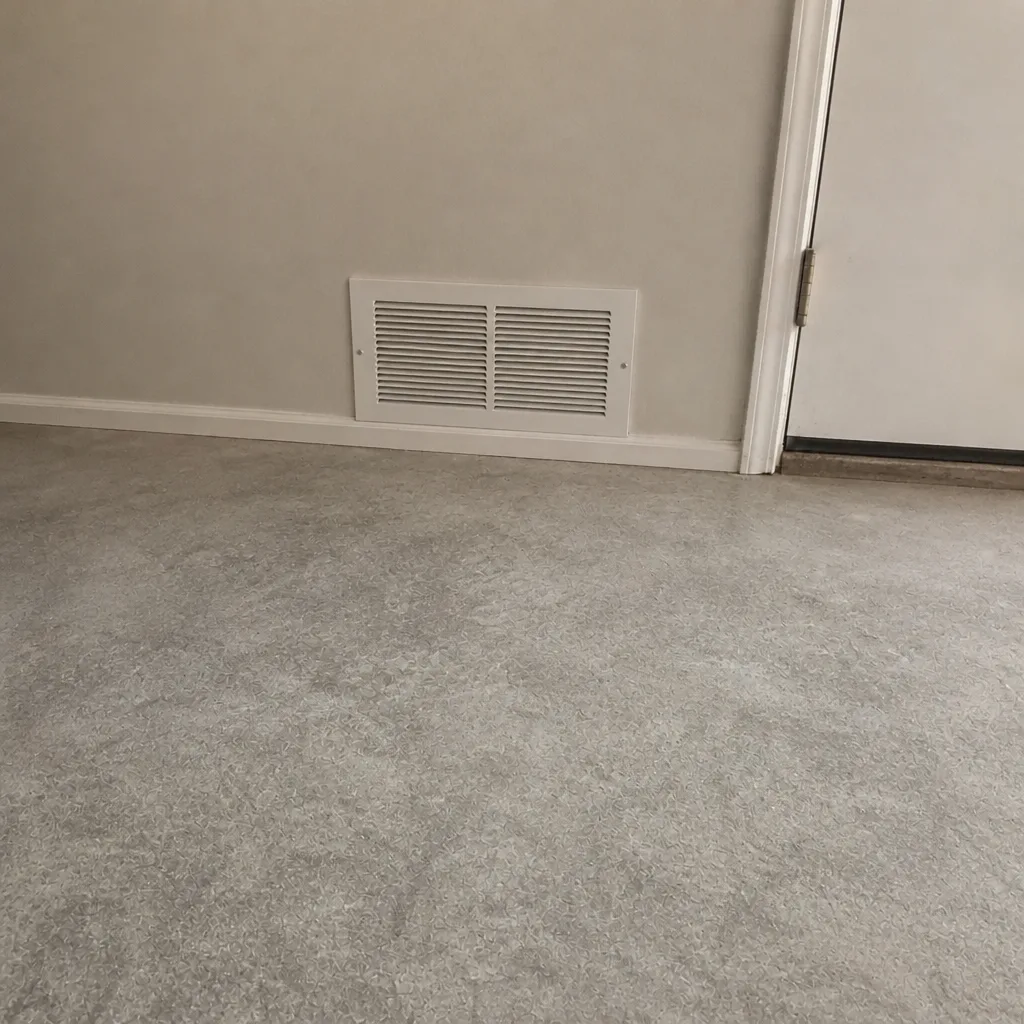 After
When to Call a Professional
Call a professional when any of the following is true, and don’t wait for a scheduled interval.
- You see visible dust or dark streaks returning to registers within two weeks of a cleaning.
- Any room has dropped to weak airflow while the others haven’t.
- You smell musty or dusty odor at any register when the system runs.
- You’ve had a renovation, roof replacement, or wildfire smoke event in the past six months.
- You’ve moved into a newly built home, or a home with previous pets.
- It’s been three to five years since the last professional cleaning, or you don’t know when it was done.
Air Duct Cleaning Seven Hills offers free estimates in Seven Hills. Call (855) 729-0413. We answer 24/7. Fast dispatch from 7am to 7pm, Sunday through Friday. The estimate is free, and the price for the work is set per job by the written estimate.
Frequently Asked Questions
Every three to five years for most homes, with a reset sooner after any trigger event. New construction settling, renovations, and wildfire smoke episodes all shorten the interval, and so does a house with pets or allergy sufferers. The best way to know is a monitoring log: filter loading speed, dust reappearance timing, and room-by-room airflow across a year will tell you when your specific house is ready. Call (855) 729-0413 for an exact quote, and estimates are free.
MERV 8 to MERV 11 is the safe range for most residential equipment, and MERV 13 is appropriate only if your air handler is rated for the added resistance. The mistake is assuming higher MERV is always better. A higher-rated filter in a housing that can’t seat it properly bypasses at the edges, which sends more debris into the ducts than a modestly rated filter seated correctly. Check the manufacturer’s specification for your system before sizing up. Call (855) 729-0413 to have the system evaluated, and estimates are free.
You can inspect segments you can reach with a flashlight and phone camera, and you should: return grilles, the accessible trunk near the air handler, and any flexible connections in the attic or crawlspace. What you can’t inspect is the interior of runs behind walls and above ceilings, and that’s where a professional camera and scope earn their keep. Recording what you can see creates a comparison point that makes the professional inspection much more effective. Call (855) 729-0413 for a professional inspection, and estimates are free.
Yes, if the smoke event is prolonged or the filter is already loaded when it starts. Smoke particles that enter the return side load the filter fast, and a filter that collapses or bypasses during the event sends fine particulate into the trunk line. Check the filter during the event, replace it as soon as it starts loading, and schedule a professional inspection afterward to check for residue in the ductwork. Call (855) 729-0413 to schedule, and estimates are free.
Photograph every register in consistent framing, write down your room-by-room airflow ratings, note any odors and their source vents, and record the filter brand, MERV rating, and install date. Then ask for a pre-cleaning camera inspection so you have documented findings. This baseline is what lets you tell the difference between a cleaning that worked and one that didn’t, and it gives the technician a starting point for future comparisons. Call (855) 729-0413 to book a cleaning, and estimates are free.
They can, when the filter is too restrictive for the blower or when the housing doesn’t properly seat it. Both conditions create a bypass, which lets the unfiltered air carry debris straight into the duct trunk. The fix is matching MERV to the equipment specification and ensuring the filter seats flat and stays seated. Our technicians use professional-grade equipment and can evaluate the setup rather than just selling a filter. Call (855) 729-0413 for an assessment, and estimates are free.
The Bottom Line
The most useful thing you can do for your duct system doesn’t cost anything: start a log. Note the filter replacement dates, the room-by-room airflow ratings, and the number of weeks it takes for dust to return to the registers. In a year, you’ll have a baseline that tells you what’s changing and when to schedule professional work. Then run the checklist in layers: monthly eyes-only checks, seasonal flashlight and camera inspections, and a professional cleaning every three to five years, sooner after new construction settling, a renovation, or a smoke event. When you’re ready to get the baseline established properly, our team at Air Duct Cleaning Seven Hills is here to help.
Contact
Call (855) 729-0413 for a free estimate. We answer 24/7. Fast dispatch from 7am to 7pm, Sunday through Friday. The price for the work is set per job by the written estimate, and we’ll walk you through what we find before any work begins.
Written by the team at Air Duct Cleaning Seven Hills.