
Last updated November 24, 2026
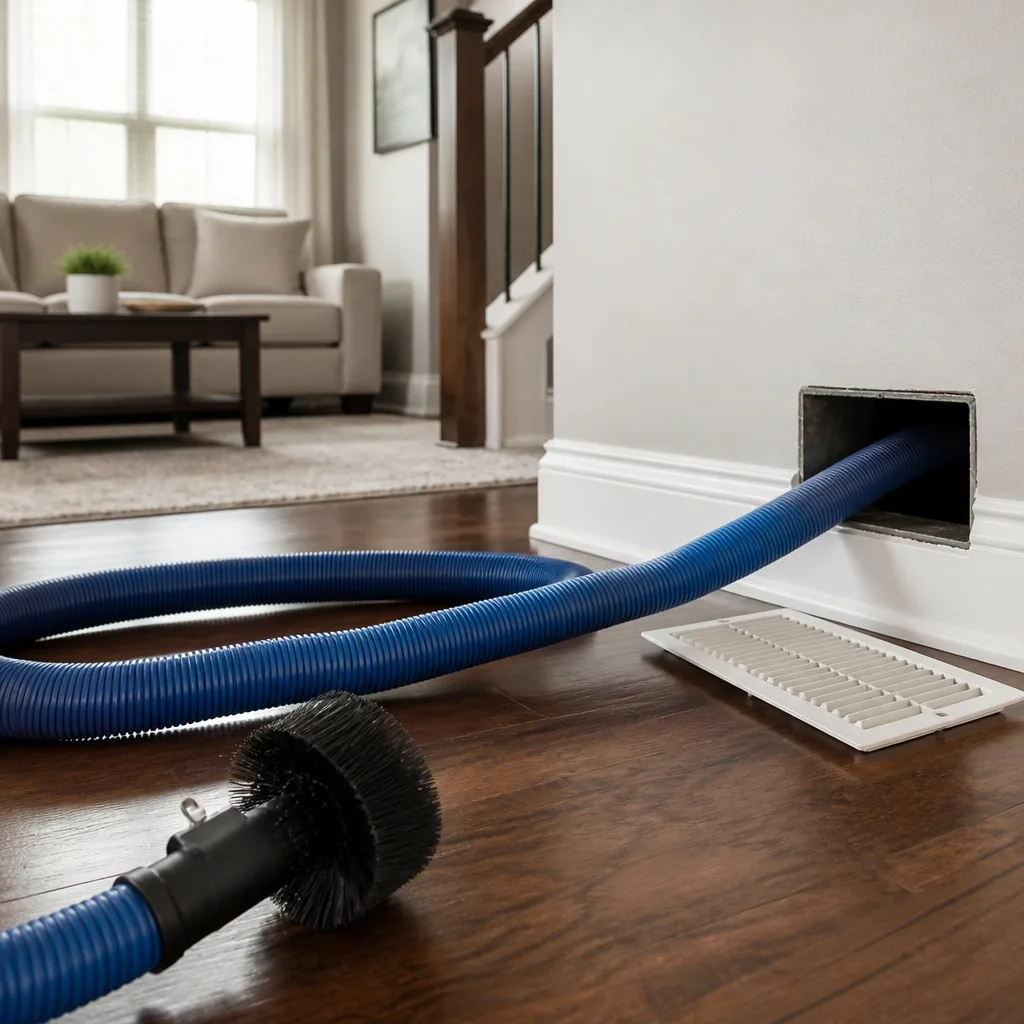 Whole-home duct cleaning
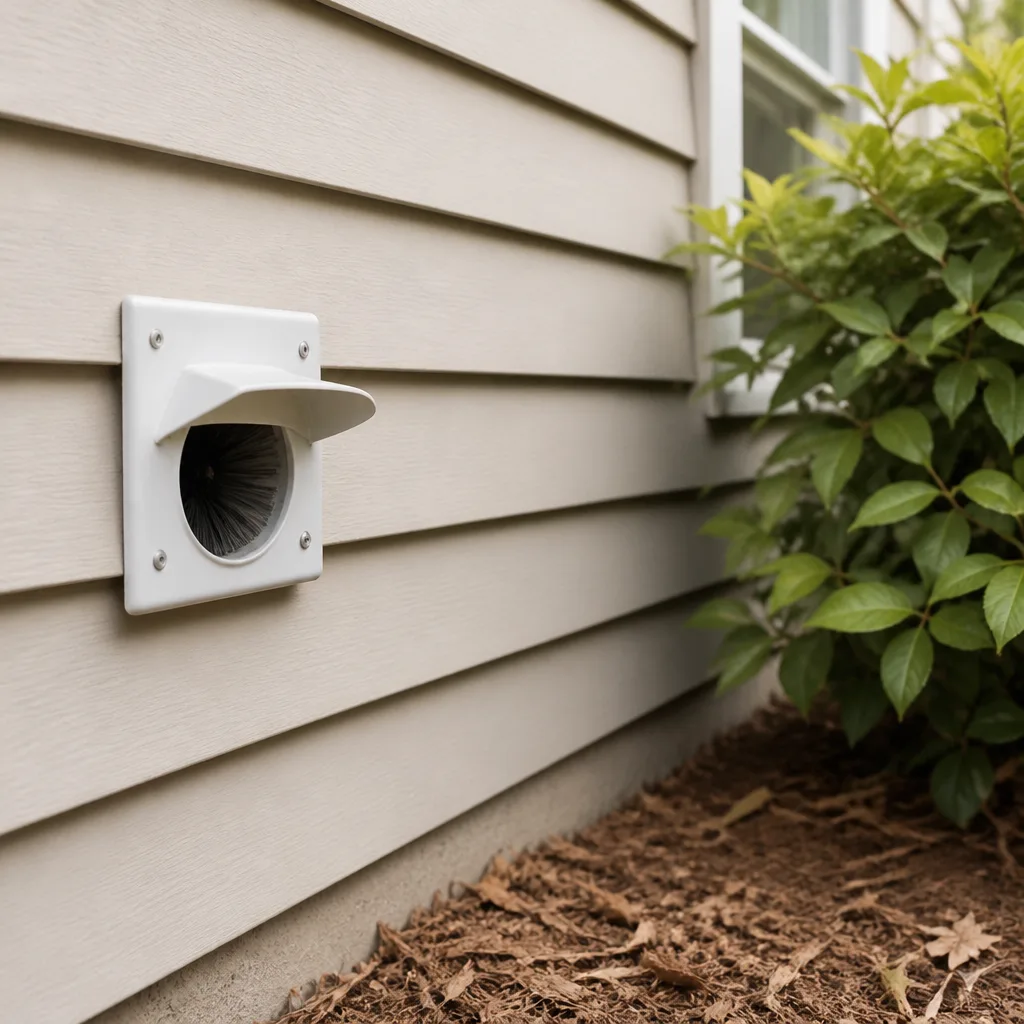 Dryer vent cleaning
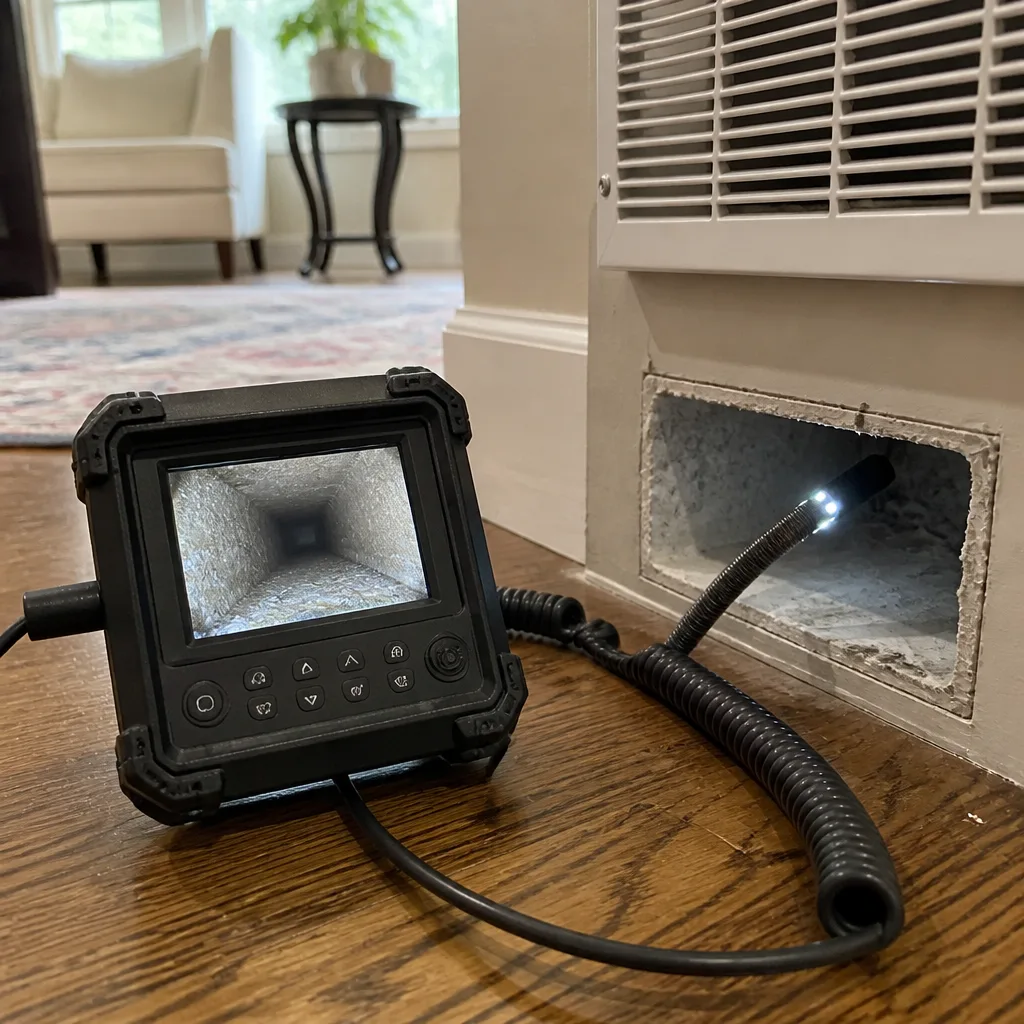 Camera inspection
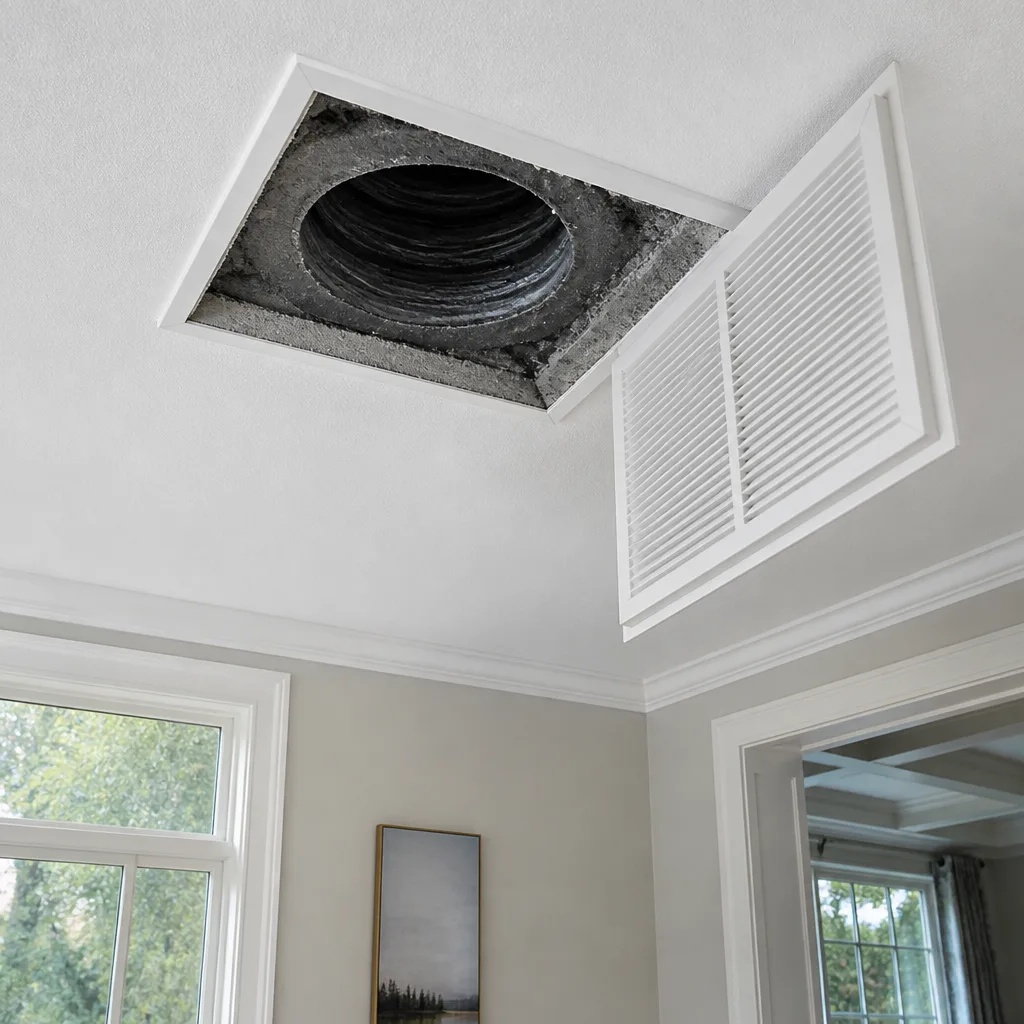 Sanitizing & deodorizing
Whole-system duct and dryer vent check with before-and-after photos - you see exactly what came out of your vents
That "$99 whole-house special" is a bait ad - the real number appears once they are in your hallway, or the "clean" is a shop-vac at the register. We photograph the inside of your ducts before and after instead.
Seasonal Air Duct Cleaning Care for Seven Hills: Year-Round Homeowner’s Guide
Most homeowners think about duct cleaning once, in spring. The calendar says clean, so they book a cleaning and forget the system until next year. But in Seven Hills, the heaviest contamination event of the year usually isn’t spring at all. It’s the first heating cycle in October, when dust that settled and baked onto heat exchanger surfaces through a dry summer gets pushed through every register in the house at once. This guide maps each of Seven Hills’ four real seasons to what actually happens inside your ductwork, what you can check yourself, and when a professional cleaning genuinely earns its cost.
Quick Answer
Air ducts in Seven Hills face four distinct seasonal pressures: spring pollen pulled in through the return, summer wildfire smoke fine particles that cling to duct walls, fall dust baked onto heating components that releases on first heat, and winter static and low humidity that keep fine particles airborne. A single spring cleaning doesn’t address three of those. The right schedule usually means one full professional cleaning timed to your system’s worst season, plus homeowner filter and register checks at each shoulder season in between.
Styles & brands we work with
- Whole-home duct cleaning
- Dryer vent cleaning
- Camera inspection
- Sanitizing & deodorizing
Table of Contents
- Spring: Pollen Infiltration and the Air Handler Problem
- Summer: Why Wildfire Smoke Particles Behave Differently in Ducts
- Fall: The Duct Inspection Before First Heat
- Winter: Dry Air, Static, and Filter Loading
- How to Decide Which Season Warrants a Professional Clean
- Why Equipment Choice Changes Your Results
- A Year-Round Duct Care Calendar for Seven Hills Homes
- Related Work That Belongs on the Same Schedule
Spring: Pollen Infiltration and the Air Handler Problem
Spring in Seven Hills brings the first real pollen load of the year, and most of it enters your home the same way your HVAC system draws in return air. Juniper, elm, and the cottonwood fluff that blows through the Front Range corridor all ride the same airstream. The filter catches a lot of it, but the return plenum and the blower compartment behind the filter are where the fine fraction settles and stays.
The air handler is the part most homeowners never see. It’s also the part where spring pollen causes the most trouble, because pollen is sticky when it’s fresh and it coats the blower wheel and the evaporator coil face. Once that coating builds, airflow drops and the system works harder to move the same volume of air.
Why register filters create more problems than they solve
It’s tempting to add small filters at the supply registers in a house where pollen is a real annoyance. We’d steer you away from it. Register filters add static pressure at the exact point where the system is trying to deliver air, and they starve rooms of flow while doing almost nothing for the return side, where most contamination actually lives. They also get forgotten, and a loaded register filter becomes a dust shelf.
A better spring approach:
- Upgrade the main filter at the air handler to the highest MERV rating your system’s manufacturer allows, and change it on schedule during pollen season.
- Check the return grille for visible dust buildup and vacuum the face without pushing debris deeper.
- Look at the blower compartment through the access panel if your system allows it. A visible mat of dust on the wheel means airflow is already compromised.
- Keep windows closed on high-wind pollen days and run the system fan on low to keep air moving through the filter instead of letting it settle.
If it’s been more than a couple of years, a spring air duct cleaning clears the return plenum and branch runs before the pollen load builds. Cleaning after the peak, rather than before it, tends to leave you with a cleaner system heading into summer.
Summer: Why Wildfire Smoke Particles Behave Differently in Ducts
Summer smoke events along the Front Range are now a routine part of the season, and the particles that matter most are the fine ones, in the PM2.5 range. These behave nothing like household dust inside ductwork. Household dust is relatively heavy and settles on horizontal surfaces. PM2.5 stays airborne far longer, travels deeper into the system, and deposits as a thin, tacky film on duct walls, on the coil, and inside the blower housing.
That film matters for two reasons. First, it’s the surface that catches and holds the next round of particles, so a duct system that’s been through a smoke season keeps loading faster than it did before. Second, the film is what you smell when the system runs. Musty or smoky odors that show up weeks after the smoke clears usually come from deposits that have already bonded to surfaces, not from air still passing through the house.
What to do with the system during a smoke event
Running the fan continuously with a good filter actually helps during a smoke event because it keeps particles moving into the filter rather than settling on surfaces. What you don’t want to do is open windows for “fresh air” on a heavy smoke day, or run a whole-house fan that pulls outside air straight into the living space.
Timing the cleaning matters. Cleaning in the middle of smoke season just means the system reloads before the season ends. Late summer or early fall, once the worst smoke is behind you, is when a professional cleaning does the most good, because it removes both the fresh deposits and the film underneath them. That’s also when we’d recommend an HVAC cleaning to address the coil and blower alongside the ducts.
Fall: The Duct Inspection Before First Heat
This is the section most homeowners skip, and it’s the one that matters most in Seven Hills. When the furnace fires up for the first time in October, months of settled summer dust gets lifted and pushed through the system in a single cycle. If you’re going to inspect the system once a year, do it before that first heating cycle, not after.
What to check on your own before calling a professional
- Open the return grille and look at the filter housing. If dust has built up around the filter frame, the filter isn’t seating properly and unfiltered air is bypassing it.
- Remove the filter and look at the blower compartment if your system allows access. A visible dust mat means the blower is pulling debris.
- Run the fan only, before the heat comes on, and note the smell at each register. A musty smell means biological growth; a burned-dust smell means deposits on heat exchanger surfaces.
- Check each register for airflow with your hand. Any register noticeably weaker than the others points to a branch run problem, not a house-wide contamination issue.
- Look for visible dust streaks around duct joints in the basement or crawlspace. Streaking means air is escaping at the joint, which is a sealing problem as much as a cleaning one.
- Note any rooms that stay dustier than the rest of the house. Uneven distribution almost always points to a specific branch run or a detached boot at the register.
The most common thing we find on fall inspections in Seven Hills isn’t a dirty duct. It’s a supply boot that pulled loose at a register after a few seasons of expansion and contraction. That’s why we seal what we find: Air Duct Cleaning Seven Hills handles repair and sealing alongside cleaning so a loose boot gets fixed the same visit instead of needing a second contractor. Our technicians have up to 10 years of experience reading these systems, and they know the difference between a duct that needs cleaning and a duct that needs sealing.
Winter: Dry Air, Static, and Filter Loading
Winter air in Seven Hills is cold and, because it’s been wrung out over the mountains before it arrives, dry. Indoor relative humidity drops into the teens in a lot of homes, and the system runs more hours per day than at any other time of year. Two things happen at once: static builds, and the filter loads faster because more air passes through it.
Static electricity seems like a minor annoyance until you understand what it does to fine particles. Dry air lets particles stay suspended longer, so the light, fine fraction circulates instead of settling. Static charges then make those particles cling to duct walls and register faces. You end up with a dust layer that’s harder to move than the same layer in humid air.
Managing filter loading through heating season
- Check the filter monthly during heating season instead of relying on a printed interval. Winter loading runs faster than the filter’s printed life in most Seven Hills homes.
- Keep the furnace fan on a schedule that balances filtration with energy use, rather than running it full time in a house you’ve just sealed up.
- Address humidity at the source with a whole-house humidifier rather than a room appliance, if your home runs dry enough that static is a real problem. Honeywell and Aprilaire humidification controls are the systems we install most, because they integrate with the furnace rather than acting as a separate appliance.
- Keep register faces wiped through winter. Surface dust is the visible symptom of a particle load that the filter is only partly catching.
If you’ve had a full cleaning in the last year or two, winter is rarely the season to clean again. It’s the season to keep the filter fresh and the humidity under control so the next spring cleaning starts from a better baseline.
How to Decide Which Season Warrants a Professional Clean
The honest answer is that most Seven Hills homes need one professional cleaning every two to three years, not one every season. The variable is which season triggers it for your house. Here’s how to decide without guessing.
Signs that this season warrants a professional clean
- Visible dust plumes from multiple registers on startup, not just one.
- A persistent musty or lingering smoke smell that doesn’t clear after a few minutes of running the system.
- Airflow reduced in three or more rooms, not just one.
- A household member whose allergy symptoms track the HVAC cycle.
- Visible dust streaking at multiple duct joints, which points to system-wide leakage.
- A renovation in the house in the past year. Drywall dust finds its way into every branch run.
Signs that a homeowner check and filter change are enough
- Dust visible only on register faces, not coming out of the ducts.
- One weak register and the rest normal.
- Filter visibly loaded but ducts behind it looking clean.
- No odors, no airflow drop, no symptoms.
When in doubt, the call that costs nothing is the inspection. A professional can tell you in ten minutes whether the system actually needs cleaning or whether you just need a filter. That’s the call we’d rather you make than book a cleaning you don’t need.
Why Equipment Choice Changes Your Results
Duct cleaning is one of those trades where the equipment separates a real cleaning from a cosmetic pass. The techniques that actually work require machinery that a shop vac and a brush can’t replace. Three pieces of equipment matter most on a typical job.
First, a negative-pressure vacuum holds the entire duct system under suction while it’s being cleaned. Without it, every brush stroke throws dust back into the air you’re trying to clean. We run Rotobrush and Nikro equipment, the same systems remediation contractors use, because they’re built to hold that negative pressure through a whole-house job.
Second, air filtration at the work site captures what gets dislodged so it doesn’t end up on your furniture. We deploy Abatement Technologies air filtration on every job. That’s a step a lot of fly-by-night operators skip, and it’s the difference between “cleaned” and “cleaned and contained.”
Third, sanitizing has to use products that are meant for duct interiors. Guardsman-grade sanitizing treatments are what we apply after cleaning, not before, because sanitizing a still-dirty duct just means sanitizing the top of the dirt. Cleaning first is non-negotiable.
You can’t verify equipment from a coupon. Ask what vacuum and what filtration the crew uses before you book. A crew that can’t name their equipment is a crew that doesn’t own the right kind.
A Year-Round Duct Care Calendar for Seven Hills Homes
If you run one schedule, run this one. It follows the four-season cycle in Seven Hills and puts the professional cleaning where it does the most good.
- Early spring (March-April): Change filter to a higher MERV for pollen season. Vacuum return grille faces. Run the fan continuously on low through peak pollen.
- Late spring (May-June): Book the full professional cleaning if it’s been two or more years, or if fall inspection flags carried over. Have the coil and blower assessed at the same time.
- Summer (July-August): Manage smoke events by keeping windows closed and the fan running with a fresh filter. Note any lingering odor at registers.
- Early fall (September): Full pre-heat inspection. Check every register, every filter housing, and every accessible duct joint. Book repair and sealing for any loose boot or streaked joint before first heat.
- Fall (October-November): First heating cycle. Note smells and airflow at first fire-up. Change filter after the first few weeks, because deposits get released in that window.
- Winter (December-February): Monthly filter checks. Address humidity with a whole-house system if static is a real problem. No full cleaning needed if you cleaned in spring.
- Late winter (February): Change filter at a normal interval. Start planning the spring clean.
This is the calendar we’d give any homeowner in Seven Hills who wants to stop guessing. It’s built around the seasons that actually stress the system here, not the generic “clean it every year” advice that ignores climate.
Related Work That Belongs on the Same Schedule
Two other jobs go on the same seasonal calendar because they fail on the same timeline. The first is dryer vent cleaning. Lint builds up in the dryer vent the way dust builds up in ducts, but the consequence is a fire risk rather than an air quality problem. Once a year, ideally in the fall when you’re already doing the pre-heat walkthrough, is a reasonable interval for most Seven Hills homes.
The second is duct repair and sealing. Every cleaning exposes joints, boots, and collars that were leaking air all along. Sealing those before winter means the heat you’re paying for actually reaches the room. We handle cleaning, dryer vent, HVAC cleaning, repair and sealing, and air quality sanitizing in one visit when the work allows, which is the practical reason to schedule the cleaning first and the repairs in the same appointment.
Common Mistakes to Avoid
- Cleaning every spring without checking whether it’s needed. In a home that had a full cleaning two years ago, spring often only needs a filter change. Spending on a cleaning you don’t need tilts the economics against ever paying for one you do.
- Installing register filters to “help” with pollen. These starve rooms of airflow and do nothing for the return plenum where spring contamination actually builds. Upgrade the main filter at the air handler instead.
- Booking a cleaning in the middle of smoke season. The system just reloads before the season ends. Cleaning after the smoke events clear gives you a clean baseline for the colder months.
- Skipping the pre-heat inspection in Seven Hills. First heat is the heaviest dust event of the year. Not checking the system before it happens means pushing the worst deposits into the air you breathe.
- Ignoring winter humidity. Low humidity keeps fine particles suspended longer and charges them so they cling to duct walls. A whole-house humidifier resolves the underlying cause that filter changes can’t fix.
- Hiring on price alone. A crew without negative-pressure equipment and on-site filtration can’t clean a duct system no matter what they charge. Ask what equipment they run before you book.
- Skipping the dryer vent because “the ducts are clean.” These are separate systems and the dryer vent carries the higher safety consequence. Put it on the same once-a-year fall walkthrough.
See the difference
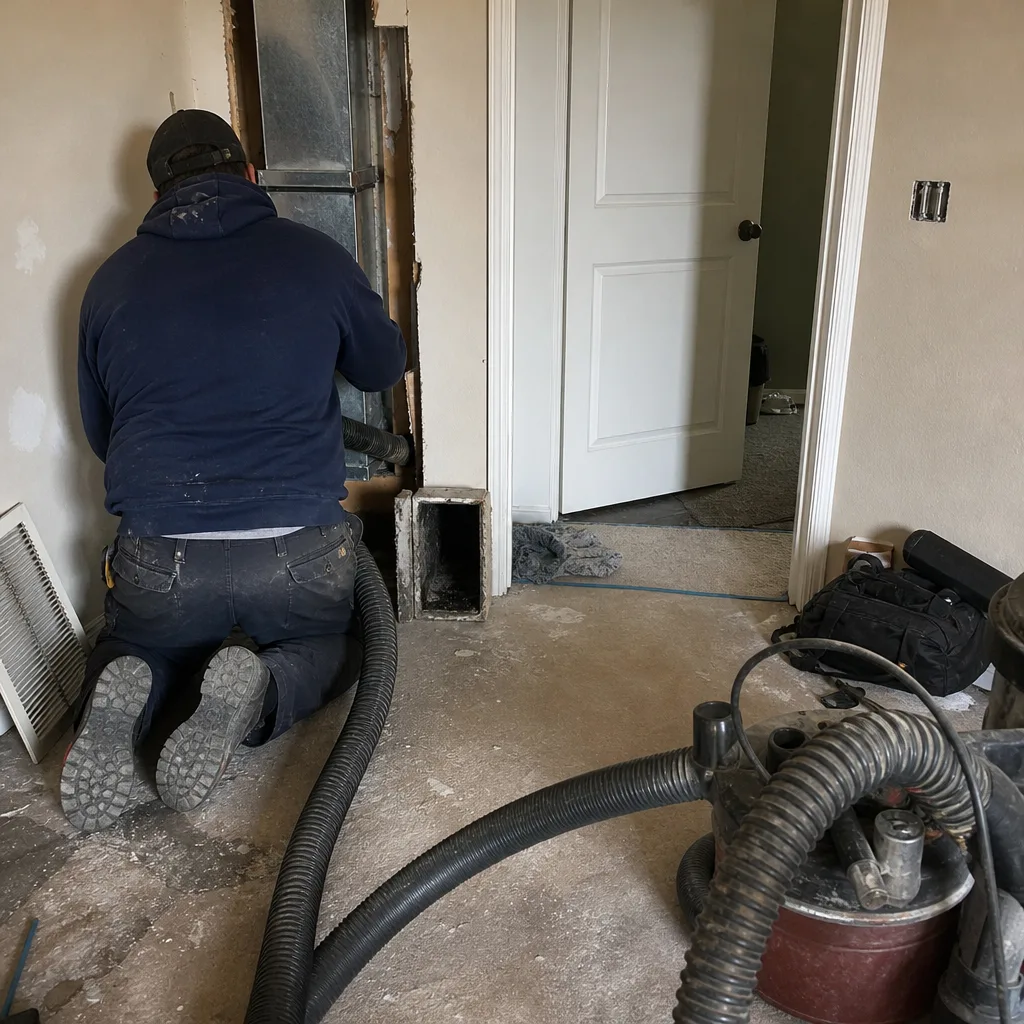 Before
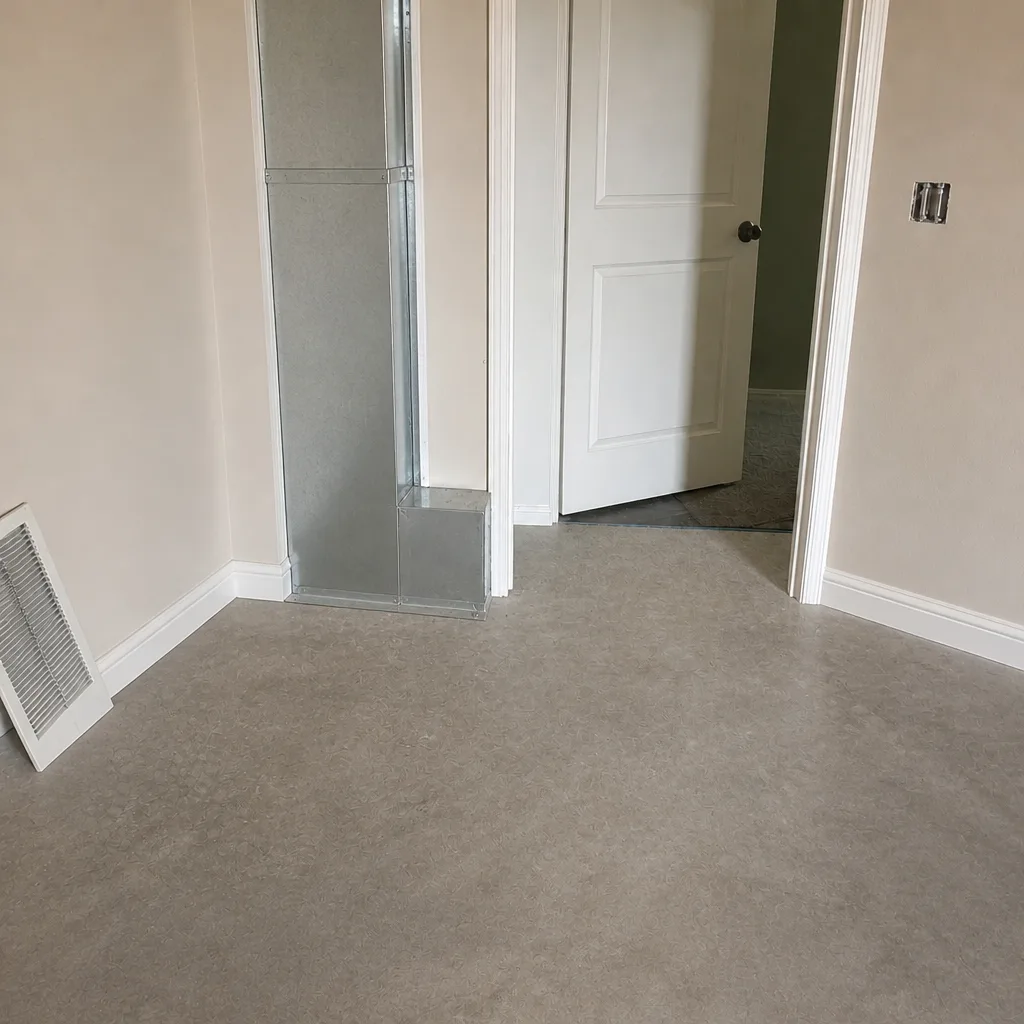 After
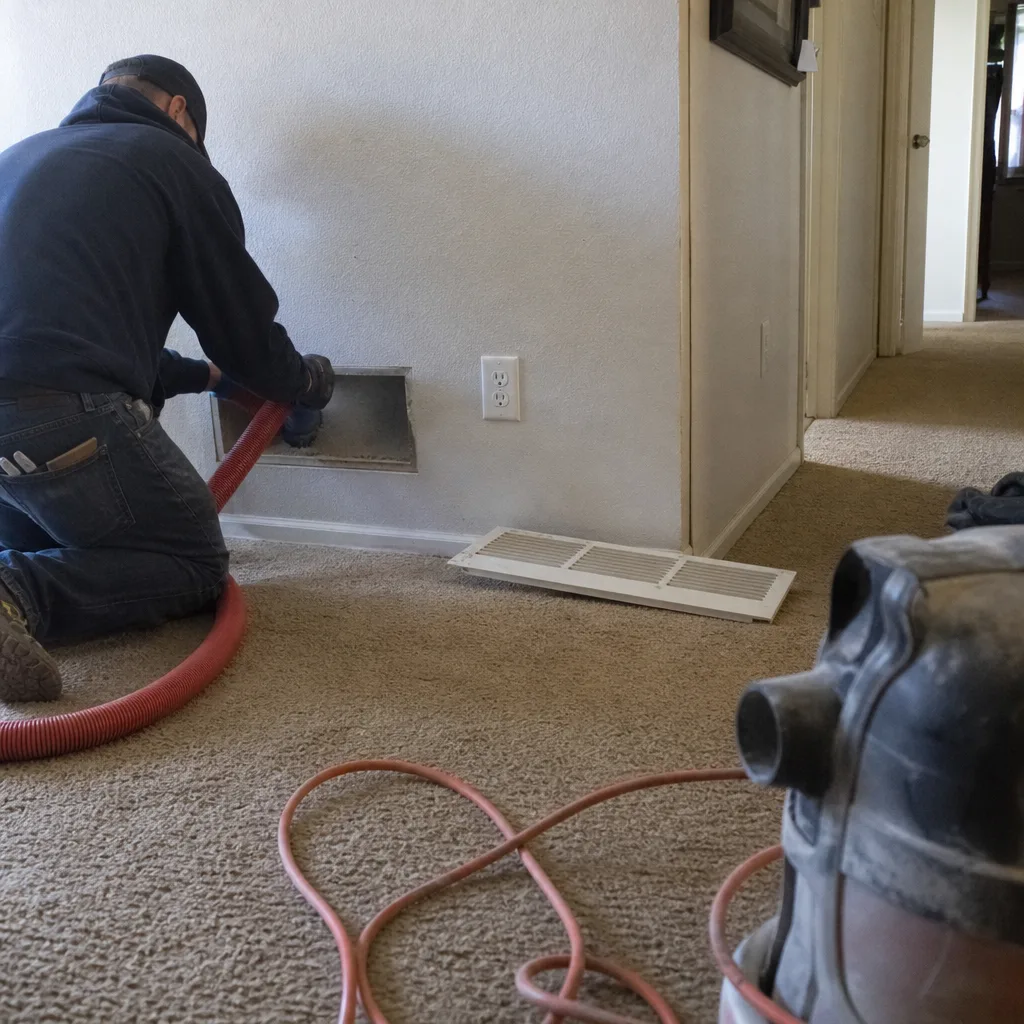 Before
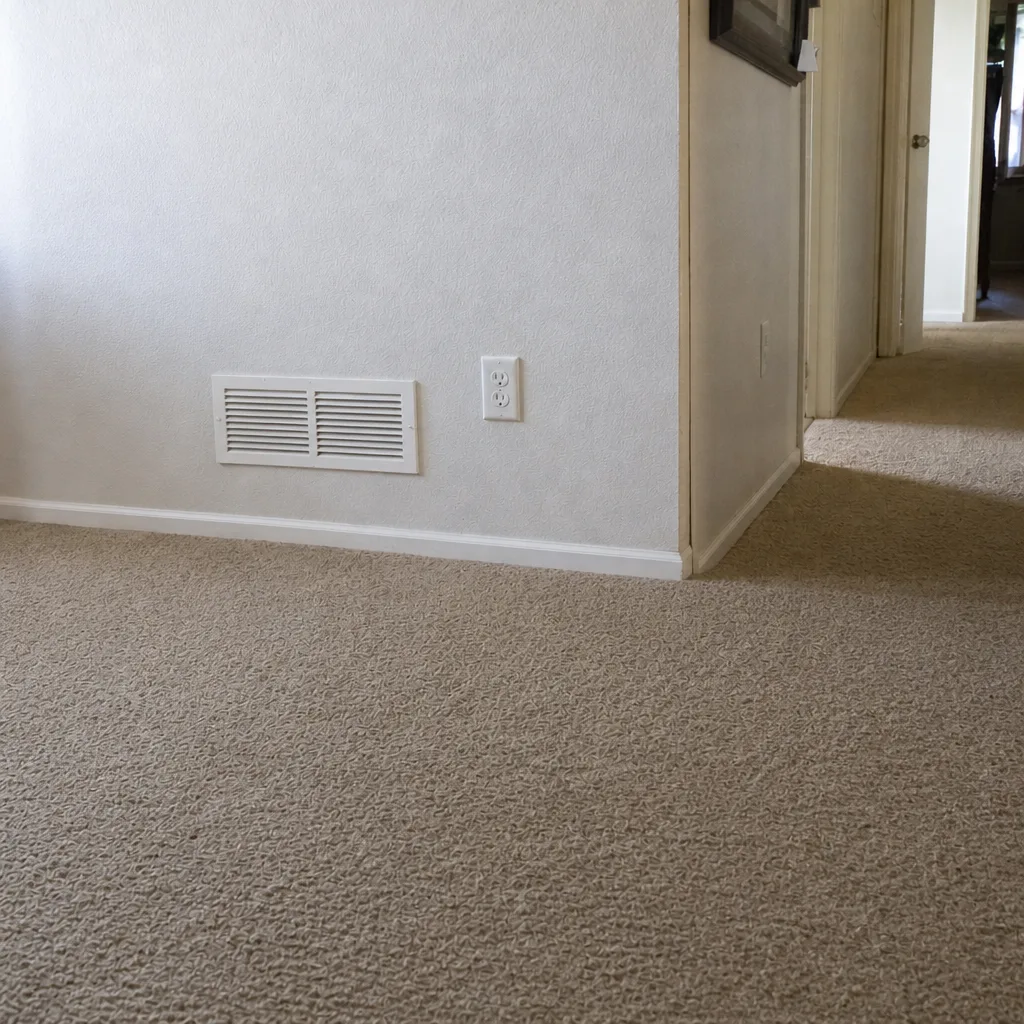 After
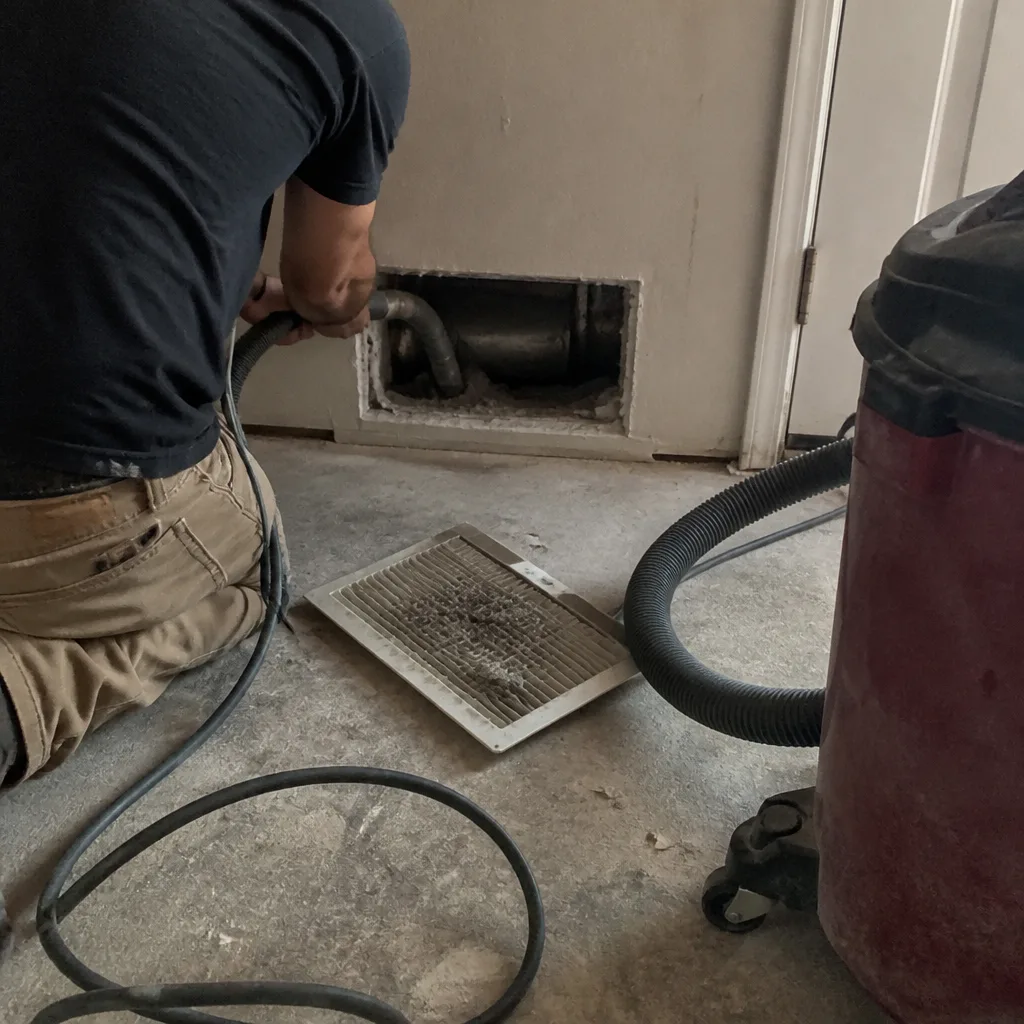 Before
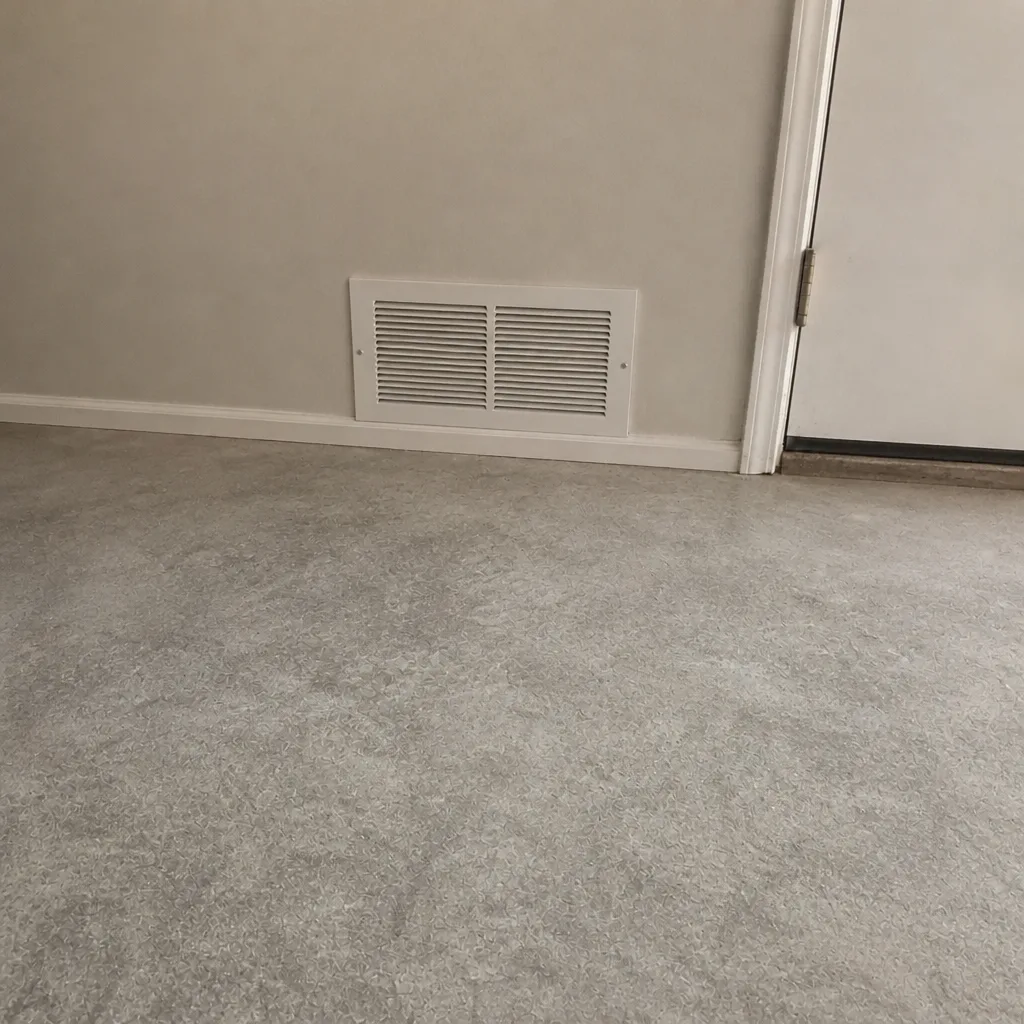 After
When to Call a Professional
Call a professional when you see dust plumes from multiple registers, smell musty or smoky odors that persist after the system runs, lose airflow in three or more rooms, or notice allergy symptoms that track your HVAC cycle. Call if the house has been through a renovation in the past year, if a duct joint is visibly leaking, or if it’s been two or more years since the last cleaning and the fall inspection flagged anything. Air Duct Cleaning Seven Hills offers free estimates in Seven Hills. Call (855) 729-0413. We answer 24/7. Fast dispatch from 7am to 7pm, Sunday through Friday.
Frequently Asked Questions
Every two to three years for most homes is the honest interval. The four-season cycle in Seven Hills loads a system faster than a mild climate would, but annual cleaning is usually more than a house needs unless the home has pets, recent renovation, or a household member with respiratory sensitivity. The fall pre-heat inspection is the best way to know whether your specific system is at the two-year line or the three-year line. Call (855) 729-0413 for an exact quote. Estimates are free.
Late spring or early fall, once the worst of the pollen and smoke have passed. Late spring cleaning clears winter dust and pollen load before summer heat runs the system hard. Early fall cleaning removes summer smoke deposits before first heat pushes them back through the house. Mid-season cleaning during pollen or smoke events tends to reload quickly. Call (855) 729-0413 for a scheduling conversation. We answer 24/7. Fast dispatch from 7am to 7pm, Sunday through Friday.
They usually leave out the parts that actually deliver a clean system: negative-pressure vacuum, on-site air filtration, and post-cleaning sanitizing. A bargain quote is often a surface vacuum of the accessible ducts with no containment, which stirs up more than it removes. Ask what equipment a crew runs before you book. Ours is Rotobrush and Nikro with Abatement Technologies filtration on every job. Call (855) 729-0413 for a free estimate.
Ask for before-and-after photos of your own ducts, and check that the crew ran negative-pressure equipment through the whole job. Visible dust plumes gone from the registers after the visit is the practical test. If you can’t tell from the outside, ask what photos they’ll take before they arrive. Call (855) 729-0413 for a free estimate. We answer 24/7. Fast dispatch from 7am to 7pm, Sunday through Friday.
Yes, and the fine particles in the PM2.5 range are the ones that matter. They stay airborne longer than household dust and deposit as a thin film on duct walls and the coil. That film is what leads to a lingering smoke smell weeks after outdoor air clears. A cleaning after smoke season removes the deposits; running a good filter during the season keeps them from building faster.
No, and it’s worth understanding why. A shop vac can’t hold a whole duct system under negative pressure, so it pushes as much dust into the air as it pulls out, and it can’t reach past the first bend in a branch run. It also often damages flex duct with the nozzle. Cleaning is a job for equipment built for it. If you’re unsure whether your system needs it, call and get an assessment. Call (855) 729-0413 for a free estimate.
The Bottom Line
Seven Hills puts four real seasonal pressures on a duct system, and one spring cleaning doesn’t address three of them. Spring brings pollen into the return and onto the blower. Summer smoke leaves a fine film that reloads faster than clean ducts would. Fall is when summer deposits bake onto heat exchanger surfaces and release on first heat. Winter keeps particles suspended with dry air and static while the filter loads faster. The practical answer is one full professional cleaning at the season that stresses your system hardest, homeowner checks at each shoulder season, and a fall pre-heat walkthrough that flags repair and sealing work before the heating cycle starts. Our technicians have up to 10 years of experience reading these systems, and we handle cleaning, dryer vent, HVAC, repair and sealing, and sanitizing in one visit when it makes sense.
Air Duct Cleaning Seven Hills offers free estimates in Seven Hills. Call (855) 729-0413. We answer 24/7. Fast dispatch from 7am to 7pm, Sunday through Friday.
Written by the team at Air Duct Cleaning Seven Hills.