
Last updated November 24, 2026
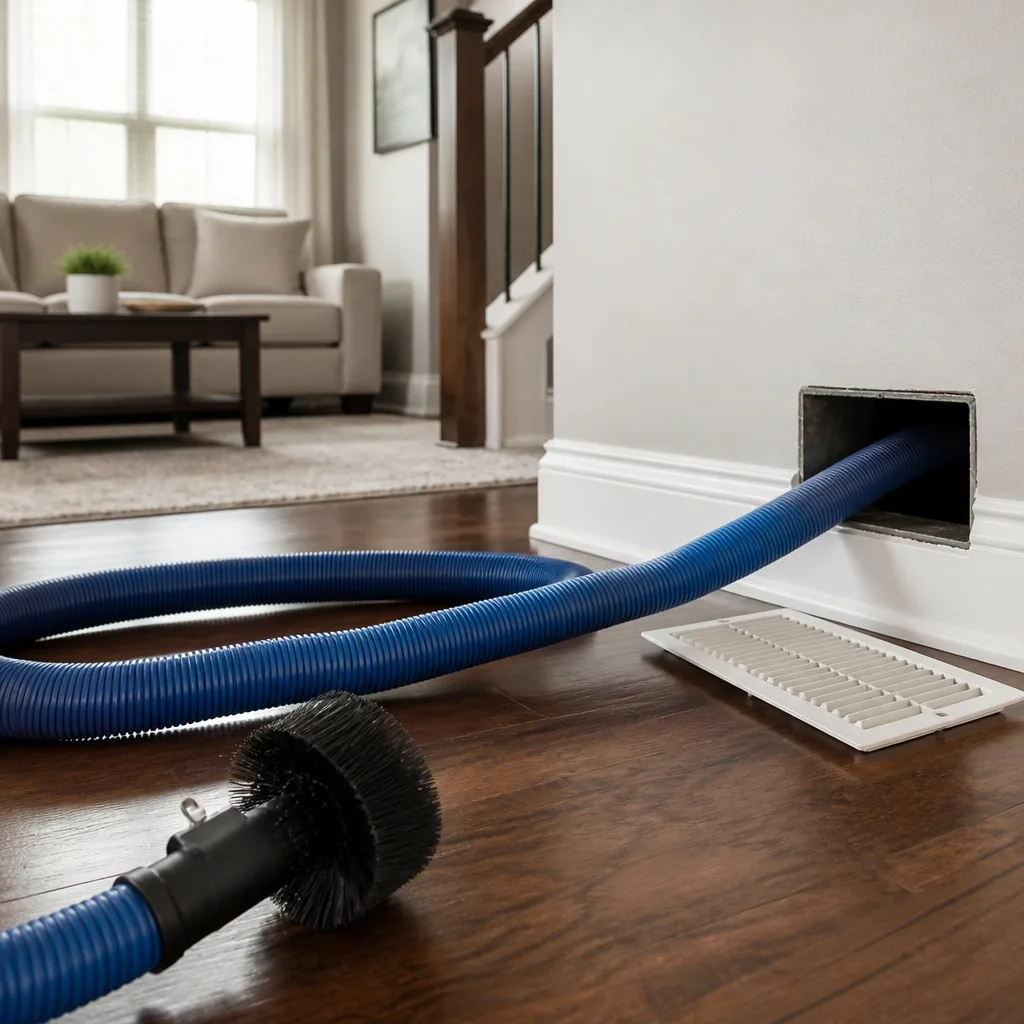 Whole-home duct cleaning
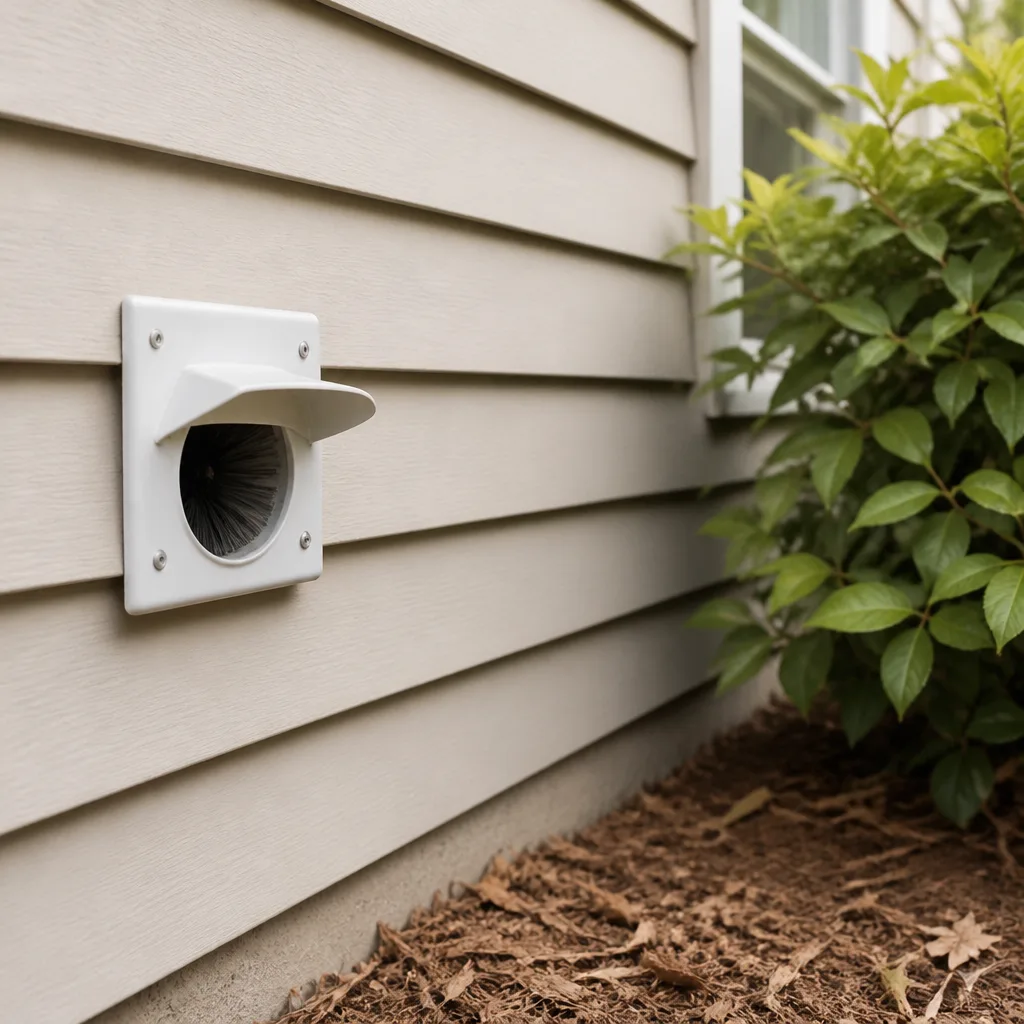 Dryer vent cleaning
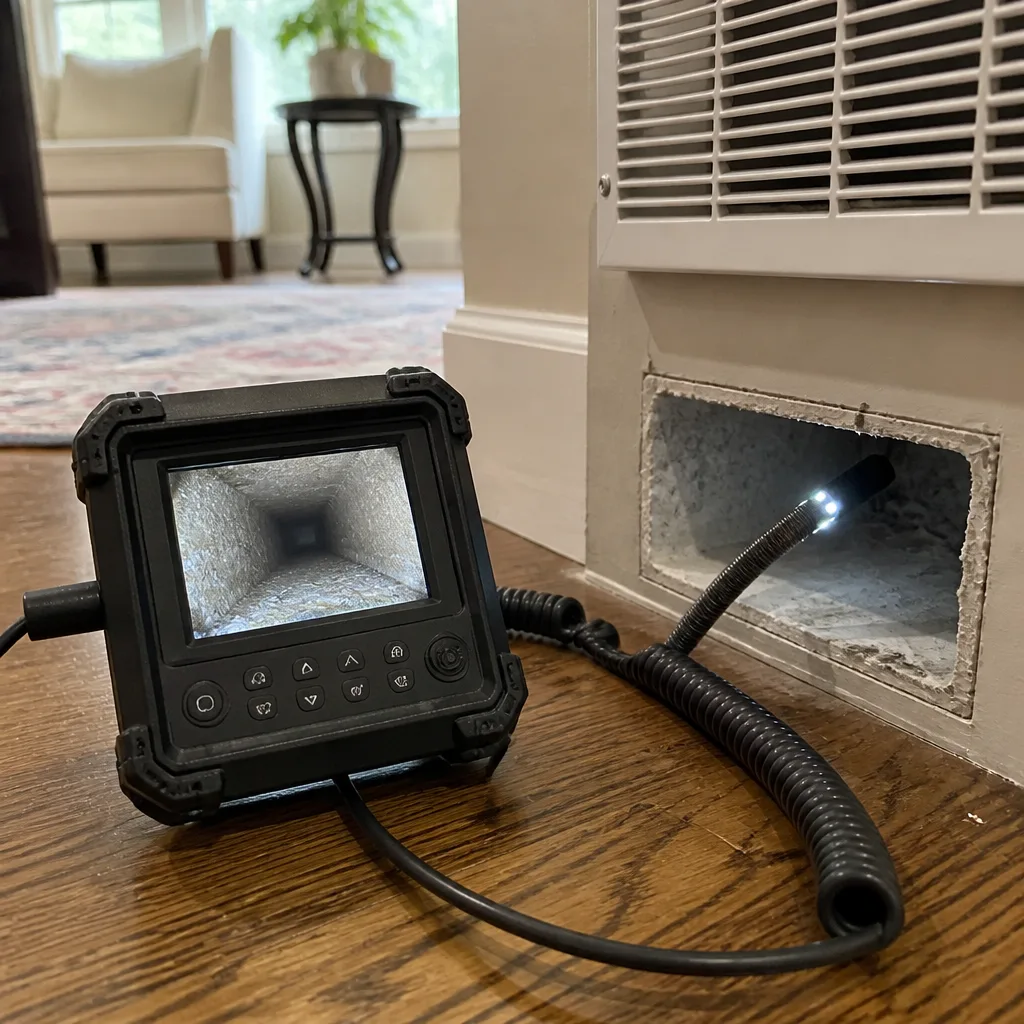 Camera inspection
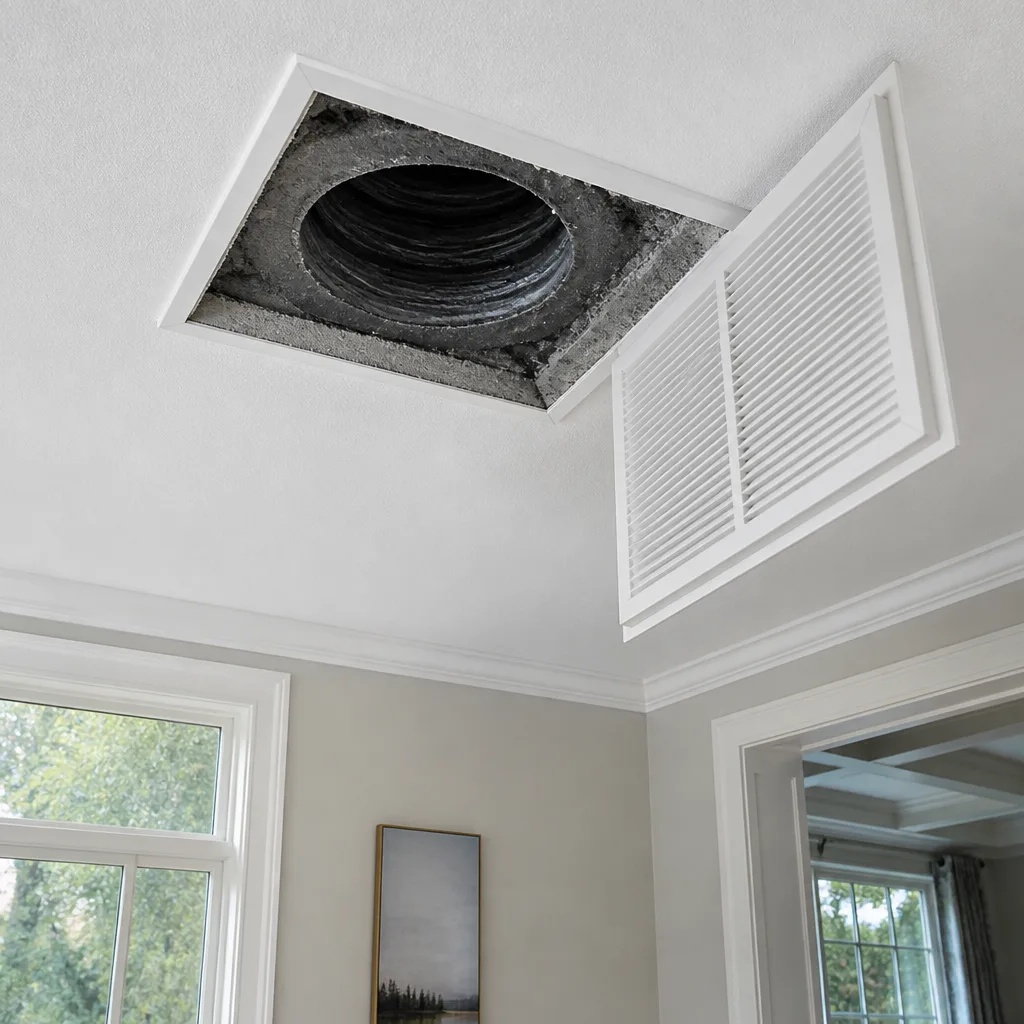 Sanitizing & deodorizing
Whole-system duct and dryer vent check with before-and-after photos - you see exactly what came out of your vents
That "$99 whole-house special" is a bait ad - the real number appears once they are in your hallway, or the "clean" is a shop-vac at the register. We photograph the inside of your ducts before and after instead.
The Complete Guide to Air Duct Cleaning in Seven Hills
Most homeowners judge a duct cleaning by what they can see: a van in the driveway, a hose running through the front door, a technician with a brush on a drill. None of that tells you whether the work was done right. A vacuum stuck on a single register and a spinning brush are not the same thing as a negative-pressure, source-removal clean, and the difference usually doesn’t show up until months later, when the dust settles back exactly where it was. This guide walks you through what actually happens inside your duct system at each stage of a professional job in Seven Hills, so you can tell competent work from corner-cutting before you pay for it.
Quick Answer
A proper air duct cleaning in Seven Hills is a source-removal process, not a surface pass. The technician establishes negative pressure so the system pulls inward, agitates the duct walls with rotary and air tools to loosen bonded debris, and collects everything through HEPA-filtered equipment so it leaves your home instead of settling into the living room. If a quote is built around a single vacuum hose and a brush with no containment, you’re buying a cosmetic service, not a clean.
Styles & brands we work with
- Whole-home duct cleaning
- Dryer vent cleaning
- Camera inspection
- Sanitizing & deodorizing
Table of Contents
- How Ducts Get Dirty in Seven Hills
- Why Seven Hills Elevation and Semi-Arid Air Change the Dust Load
- The Source-Removal Sequence: Why Order Matters
- What Should Happen at Every Register
- How to Verify the Work Was Actually Done
- When Cleaning Alone Isn’t Enough
- Dryer Vents and HVAC Coils: The Adjacent Work
- What Air Duct Cleaning Costs in Seven Hills
How Ducts Get Dirty in Seven Hills
Ductwork is a closed loop only in theory. In practice, every return pulls in whatever is floating through the house, and every supply pushes it back out at a slightly different velocity. Over a few heating and cooling seasons, fine particles that never get captured by a standard filter start to plate the inside of the duct walls. That plating is where the problem lives. A single dusting on a shelf wipes clean, but dust bonded to a galvanized duct interior needs mechanical agitation to break it loose.
In Seven Hills, the drivers are specific. The housing stock includes a lot of homes built into sloping lots, which means longer, more winding duct runs than you’d find on a flat subdivision lot. Every bend in a duct is a place where air slows down and drops what it’s carrying. Return chases tucked into tight mechanical closets collect debris at the bottom, and that debris is out of sight until someone pulls the grille. Homes with finished basements often have ducts running through soffits and framed cavities, which makes access for cleaning trickier and makes it more important that the technician knows the layout before the equipment is running.
What we look for on an initial walkthrough:
- Visible debris plated on return grilles or supply diffusers
- Dust trails around register edges, which suggest airflow leaks at the boot
- Musty or stale odor when the system first kicks on
- Cold or warm rooms that never quite match the rest of the house
- Heavy dust on ceiling fans and horizontal surfaces that returns within days of cleaning
None of those confirm that cleaning is overdue on its own. What they do is tell you where to look. A duct system with a filter change history and light plating doesn’t need the same treatment as one that’s been running pet dander and construction dust through it for a decade. A reputable air duct cleaning assessment starts with that walkthrough, not with a coupon.
Why Seven Hills Elevation and Semi-Arid Air Change the Dust Load
Seven Hills sits higher than the lower Front Range communities to the east, and that elevation shifts how dust behaves inside a forced-air system. Colder average temperatures stretch the heating season, which means the furnace runs more hours per year and pushes more air through the same ducts. Higher elevation also means lower air density, and lower density changes the way particles and static charge interact with duct surfaces. In practical terms, fine dust tends to stay suspended a bit longer in the moving airstream before it settles, so it distributes deeper into the run rather than dropping out near the first supply.
The semi-arid climate adds a second factor. Low indoor humidity through the winter months lets fine particulate stay dry and airborne, which makes it easier for it to travel the full length of a duct and easier for it to stick to walls as it picks up a static charge. Dry air also means the owner notices the dust more, because dry air and dry skin go together with the sensation of “the house is always dusty.” That perception is real, and it usually points at the return side of the system.
What this means for a Seven Hills job:
- The main trunk line often holds more debris than the supply branches, so it deserves dedicated attention
- Return ducts carry the heaviest load and need the most thorough agitation
- Static bonding can make dry debris cling harder than in humid climates, so rotary agitation beats a straight vacuum pass
- Filter quality matters more in a dry, high-elevation home because standard filters release as much as they capture when they load up
This is the reason the source-removal sequence is not optional. A passive vacuum will pull the loose material off a duct wall, but the bonded layer and the settled debris in the low spots on longer Seven Hills runs need to be broken free before they can be collected.
The Source-Removal Sequence: Why Order Matters
The sequence a technician follows is the single best indicator of whether you’re getting a real clean. Every step depends on the one before it. If the order runs short, the work looks finished long before it is.
- Containment and negative pressure. The collection equipment is connected to the main trunk, and the system is sealed at the registers to create negative pressure. From this point on, air flows inward. Dislodged material travels to the collection point instead of drifting into the house. This step is skipped in a surprising number of budget jobs, and that’s exactly when a homeowner notices dust settling on the furniture the same day.
- Source agitation. Rotary brushes and compressed-air tools work the duct walls from the inside, breaking the bonded layer loose. Different duct materials need different tools. Flex duct needs a gentler approach than rigid galvanized, and a technician who uses the same attachment everywhere is telling you something.
- HEPA-filtered collection. Everything loosened in step two moves into a filtration unit, and the filter has to be fine enough to hold what it captures. This is where equipment grade matters. Consumer-grade vacuums don’t have the airflow or the filtration to keep up with a source-removal clean on a whole-house system.
- Branch-by-branch coverage. The main trunk is where the equipment connects, but every branch needs its own pass. Working only the trunk leaves the supply and return branches essentially untouched.
- Inspection and documentation. Before and after photos, plus a look inside the trunk through an access point, close the job. If nothing was documented, ask for it.
The equipment we bring to a Seven Hills job is set up for this sequence. Rotobrush and Nikro systems are built for source-removal work, and Abatement Technologies filtration units are what remediation professionals use to contain contaminants on-site. That containment step is the one most likely to be cut on a low bid, and it’s the one that determines whether the dust you paid to remove actually leaves the house.
What Should Happen at Every Register
Homeowners tend to watch the parts of a duct cleaning they can see. The registers are that window, and what happens at each one tells you whether the technician is doing the full job or just the visible minimum. Here’s what a proper pass looks like at ground level.
- The grille comes off, not just the cover. The supply or return grille is removed so the boot and the first section of duct can be reached. If a technician is working through the grille with the cover in place, the reach is limited.
- The duct boot gets agitation. The boot is the transition where the duct meets the room, and it collects debris because the air slows there. It needs to be worked with a smaller tool, not skipped.
- Flexible or rigid connections get checked. If a duct connection is loose or torn, it should be flagged. Running agitation through a compromised connection can dislodge it further, which is why the walkthrough happens before any equipment runs.
- Reassembly is done carefully. Grilles go back level and secure. Dampers that were open go back open. There’s no reason for a room to be left with different airflow than it started with.
- Photos are taken at the register. A register photo before and after, plus a trunk photo, is basic documentation of the work.
Any of those steps can go missing on a low-price job. The register photo set is your best proof that the work happened where it was supposed to. If a company can’t show you a photo of the inside of a supply branch it just cleaned, treat that as an open question.
How to Verify the Work Was Actually Done
You can’t see inside your ducts once the technician drives away, so verification has to happen during the job. A few checks that a Seven Hills homeowner can run without any special equipment:
- Watch the containment step. Before the technician starts agitating, the collection equipment should be connected and the system under negative pressure. If the brush is running first, ask about it.
- Ask for before-and-after photos of your own ducts, not stock images from a website. A proper job documents the trunk line and at least a few supply branches.
- Look inside one register after the clean. A flashlight into a supply boot after a proper clean should show a duct wall without heavy plating or settled debris. It won’t be spotless bare metal if the duct is old, but it should look like it was cleaned.
- Check the return side. Returns carry the heaviest load, so if a company documented supplies and skipped returns, the job isn’t finished.
- Note whether the technician mentions anything found during the job – a torn flex connection, a coil that needs cleaning, a filter that’s undersized for the system. A technician who cleaned and left without a word is either not looking or not reporting.
That last point matters. A duct cleaning exposes things. If a supply branch has a rodent or construction-debris problem, or a coil is coated, you’ll want to know before it turns into an HVAC repair. If a plenum connection is loose, it’s better to hear about it while the technician is still there. When something needs repair after cleaning, duct repair and sealing can usually be handled in the same visit.
When Cleaning Alone Isn’t Enough
Honest assessment means telling a homeowner when cleaning isn’t going to solve the problem, and what actually will. These are the cases we’ll flag before the work starts rather than after.
Coil cleaning vs. duct cleaning
The evaporator coil sits inside the air handler and is separate from the ductwork. A cleaned duct system feeding an air handler with a fouled coil will still struggle on airflow and efficiency. Coil cleaning is a different job on a different surface, and it’s part of the HVAC cleaning scope when the coil is the bottleneck.
Filter upgrade vs. filter replacement
Changing a filter is routine maintenance. Upgrading the filter housing or moving to a higher-efficiency filter that the blower can actually handle is a different decision. A filter that’s too restrictive chokes airflow and can be worse than a slightly lower-rated one that runs clean. Brands like Honeywell and Aprilaire make filter and filtration products that get recommended often for that reason: the systems are built for a particular airflow range, and matching the filter to the blower is the point.
Sanitization vs. deodorizing
Sanitizing an interior duct surface addresses microbial growth on the duct walls. Deodorizing masks an odor. If the smell is coming from a damp coil, a flooded crawlspace, or a biological problem at the air handler, sanitizing the ducts alone won’t solve it. There’s a place for Guardsman-grade sanitizing treatments on a cleaned system, and there’s a place for finding the source of the moisture first.
Duct sealing vs. duct cleaning
Cleaning removes debris. Sealing closes the leaks that let new debris in around every boot and joint. If the ducts are leaking at the supply boots, cleaning them and walking away just resets the clock. Sealing after cleaning keeps the result.
Whole-house air quality upgrades
Humidity control, filtration, and ventilation are separate systems from the ducts themselves. When a Seven Hills home has an ongoing dust or allergen problem that cleaning didn’t resolve, that’s where the conversation moves next. Not everyone needs it, and a technician who leads with an upgrade instead of an inspection is skipping a step.
Dryer Vents and HVAC Coils: The Adjacent Work
A dryer vent is not part of the HVAC system, but it lives in the same corner of a homeowner’s mind: both are long, hidden runs of duct carrying air out of the house, and both collect lint and debris where you can’t see it. A clogged dryer vent is a genuine fire risk, and it’s one of the more common causes of house fires in the country. That’s why dryer vent cleaning gets recommended alongside duct work rather than treated as a separate appointment months down the road.
In a Seven Hills home, dryer vents often run through finished walls to an outside wall, which means the run length and the number of elbows matter. Long runs with poor slope hold more lint, and the exterior termination gets screened or blocked more easily. If the dryer is taking two cycles to dry a normal load, the vent is the first place to look.
HVAC cleaning is the third piece in the same category. Cleaning the air handler, blower wheel, and coil is what keeps a cleaned duct system from re-contaminating itself. If the blower is coated, every cubic foot of air the system moves picks up a bit of debris on the way out. A single appointment covering ducts, air handler, and coil gets the whole path clean in one pass rather than three.
What Air Duct Cleaning Costs in Seven Hills
Pricing in this trade is not uniform, and the honest answer is a range based on the size of the home and the condition of the system. Whole-system ranges in the Seven Hills market typically fall somewhere in the low hundreds for a straightforward home and climb toward the middle four figures for a larger property with heavy accumulation, a coated coil, or sealing work bundled in. The written estimate sets the final price. What matters more than the number on the front of the quote is what’s inside it.
- System size: number of supplies and returns, and the length of the main trunk
- Duct material: rigid galvanized vs. flex, since rigids tolerate more aggressive agitation
- Condition: light plating compared to heavy settled debris, plus any pest or construction-debris issue
- Add-ons: coil cleaning, filter upgrade, sanitization, and duct repair or sealing
- Dryer vent: a separate run and a separate price line
We quote per system, not per vent, so the estimate is one flat number for the scope in writing, agreed before any equipment runs. No hours-based pricing, no add-ons discovered on-site after the work has started. That’s the difference between a duct cleaning you can budget for and a surprise invoice. A quote that’s dramatically lower than everything else you’ve received should raise a question about the containment step and the branch coverage, not a decision to book it. Ask what happens to the debris after agitation. Ask for before-and-after photos of your own ducts. If a company can’t answer either question, the price isn’t the issue.
Common Mistakes to Avoid
- Booking on price alone. A quote that undercuts every other bid has to cut something, and it’s usually the containment step or branch coverage. With Seven Hills housing stock and the dust loads that come with the elevation, a partial clean leaves the hardest debris in place.
- Believing a single-register vacuum is enough. A vacuum running on one register doesn’t establish whole-system negative pressure. The rest of the system is being agitated with nothing pulling debris toward the collection point.
- Skipping the return side. Returns carry the heaviest particulate load, and they’re the easiest part of the job to short-change because they’re less visible than the supply grilles in each room.
- Assuming a filter change counts as a duct clean. A new filter slows new debris but doesn’t remove what’s already bonded to the duct walls. Filter changes are maintenance, not cleaning.
- Ignoring the winter dryness signal. Semi-arid air keeps fine dust suspended longer, and if the house feels dusty within days of a cleaning, the source is somewhere the last technician didn’t work.
- Not asking for documentation. A clean with no photos of your own ducts is a clean you can’t verify. Photos of the trunk and a few supply branches are standard practice.
- Letting a technician upsell sanitizing before the inspection. Sanitization has a place on a cleaned system. Sold as a standalone service before the ducts are clean and inspected, it’s covering odor instead of addressing it.
See the difference
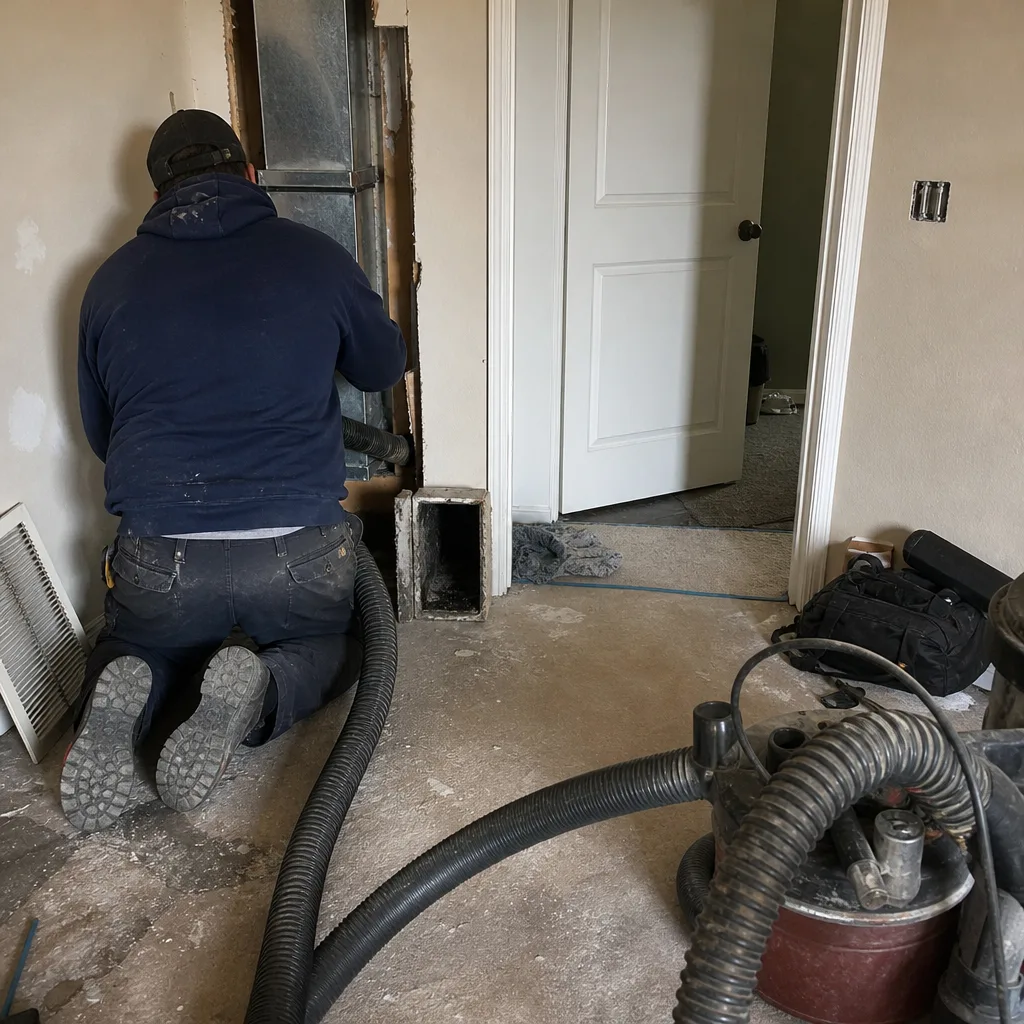 Before
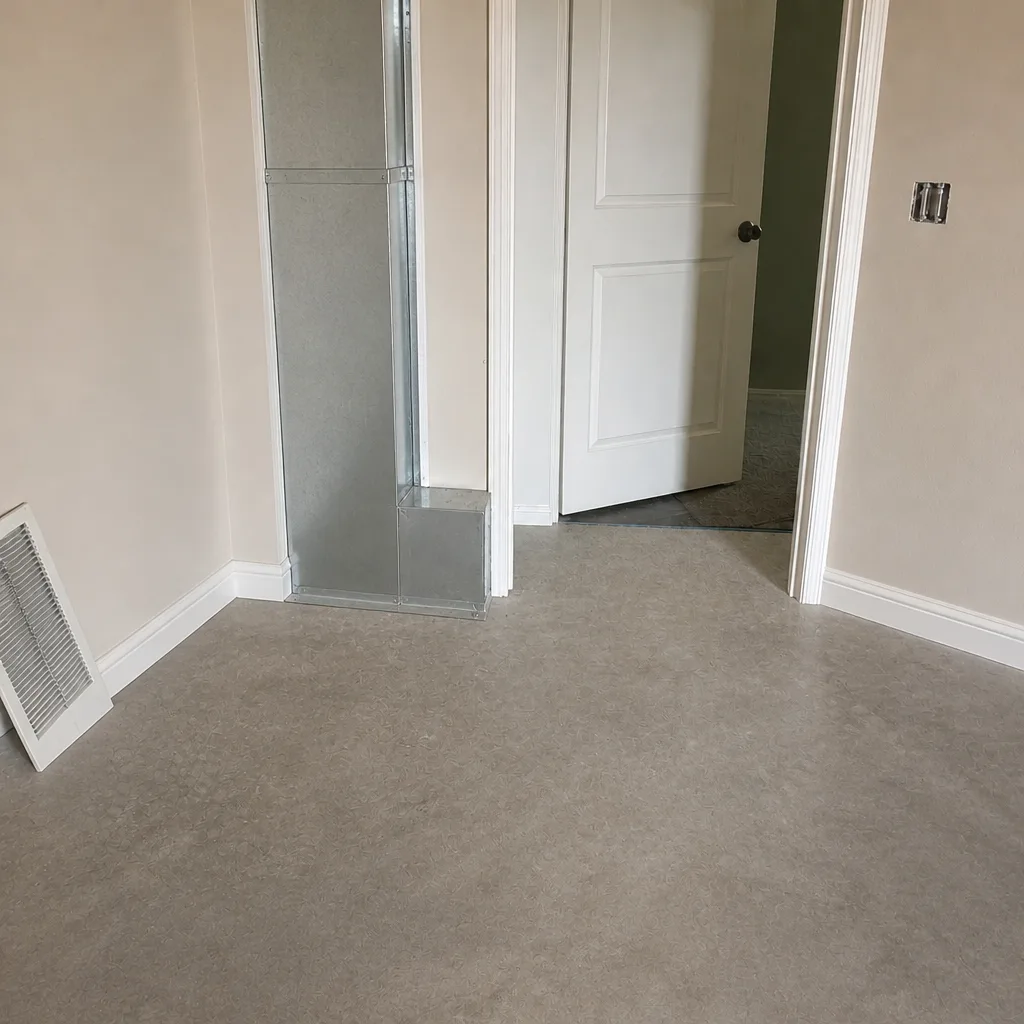 After
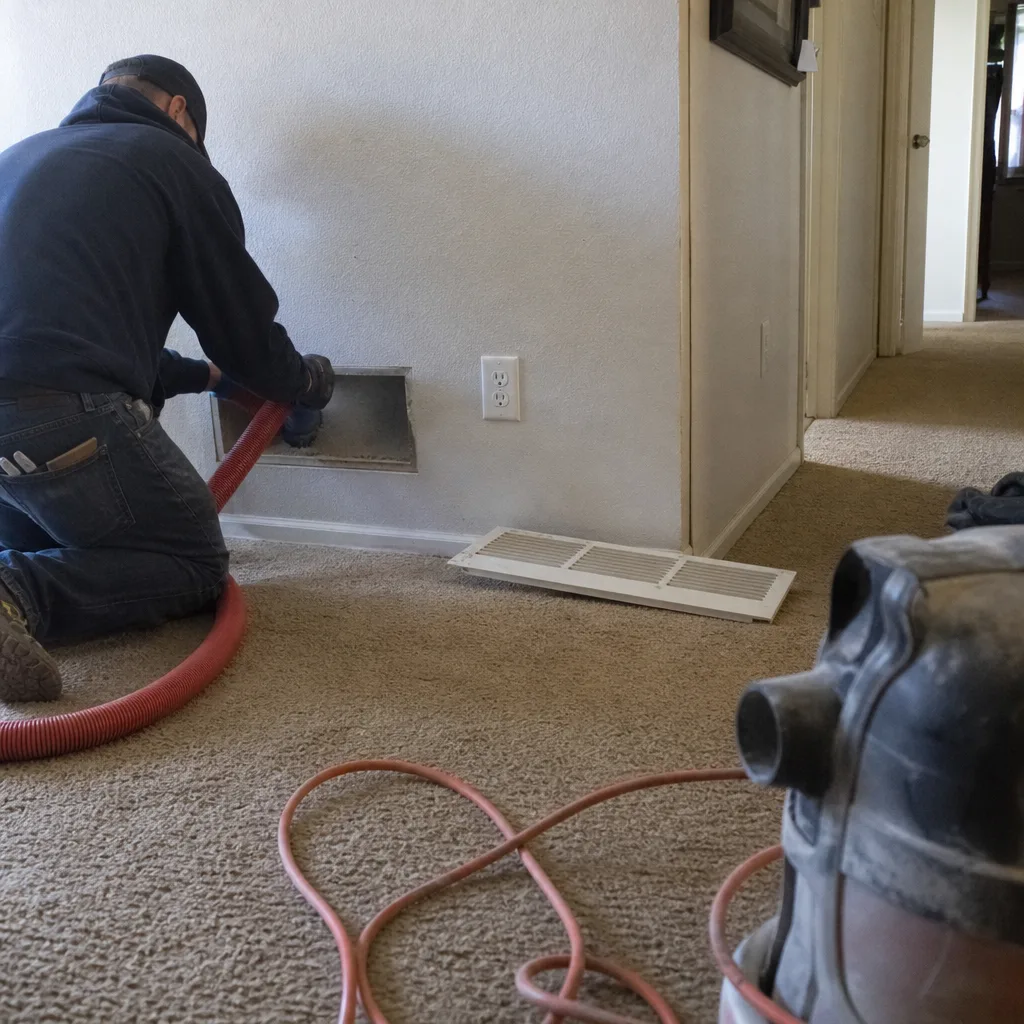 Before
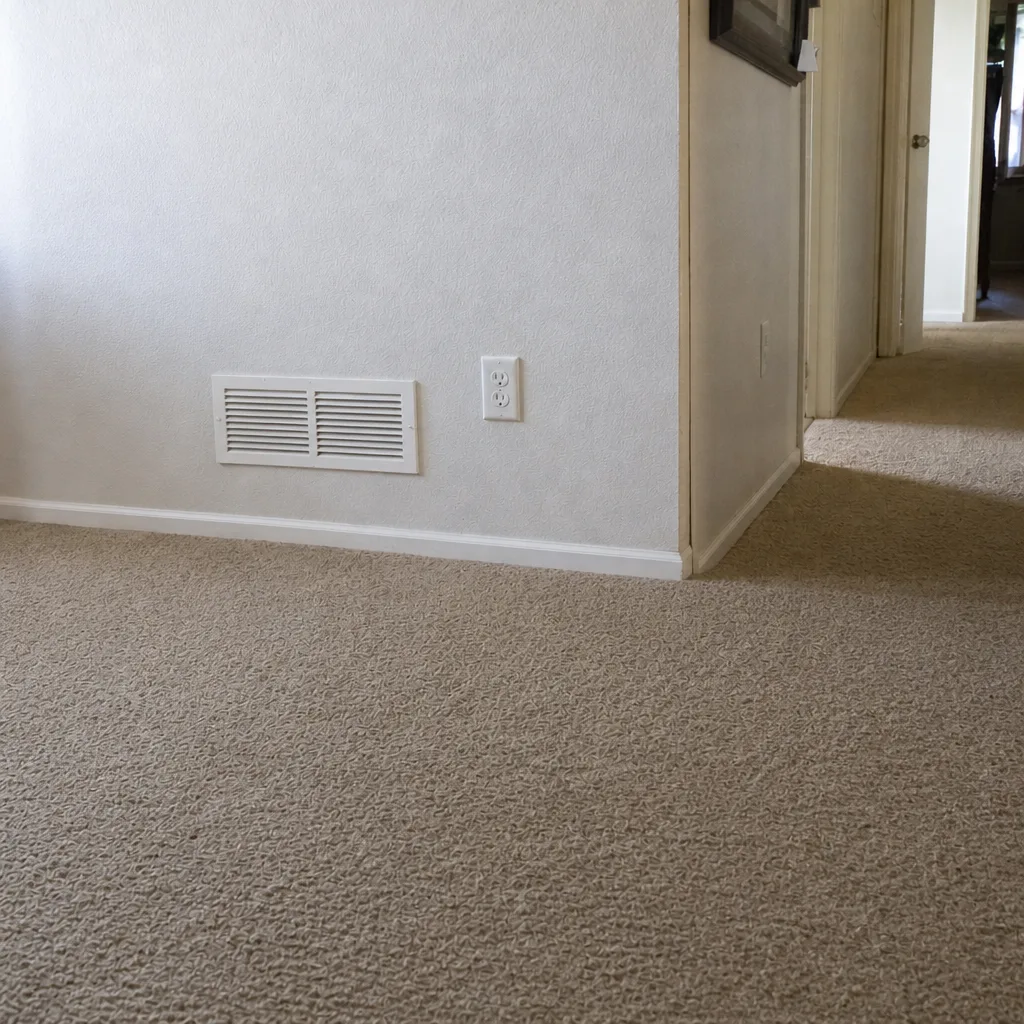 After
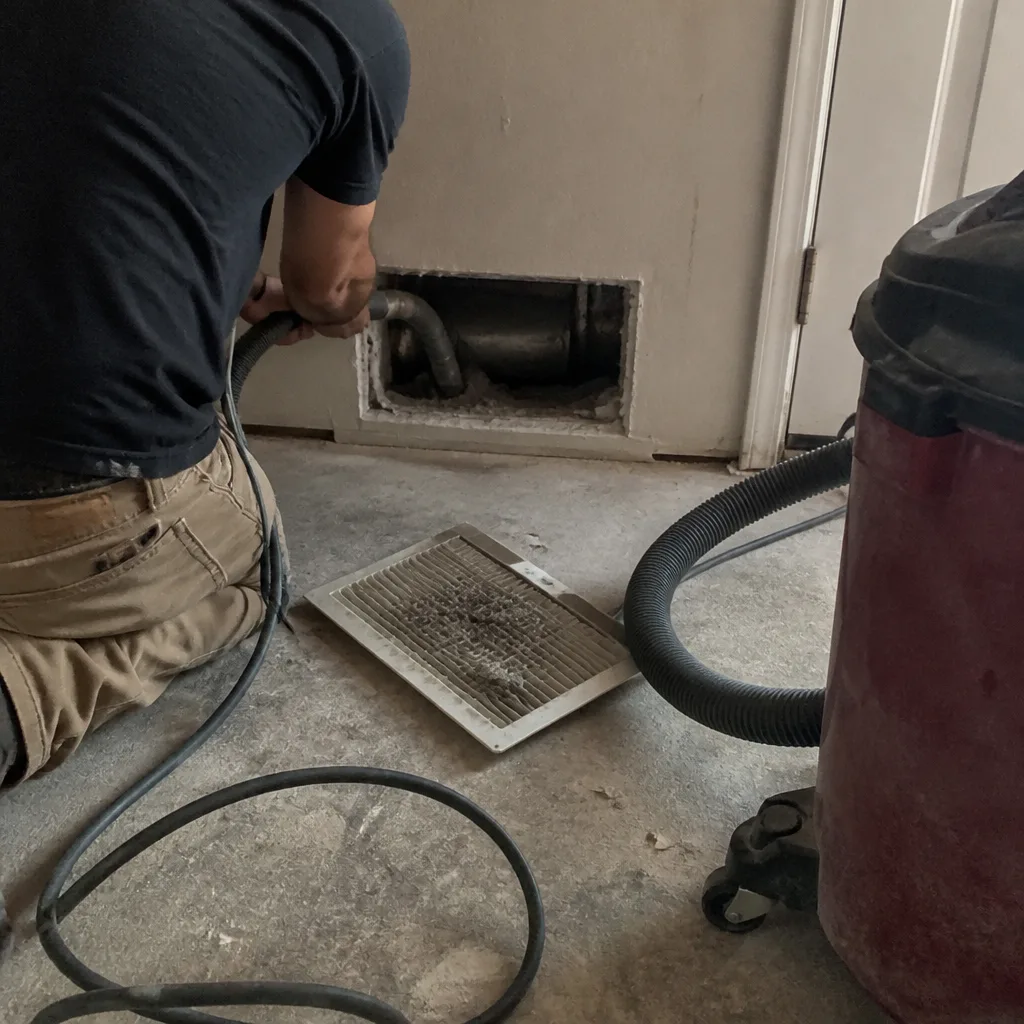 Before
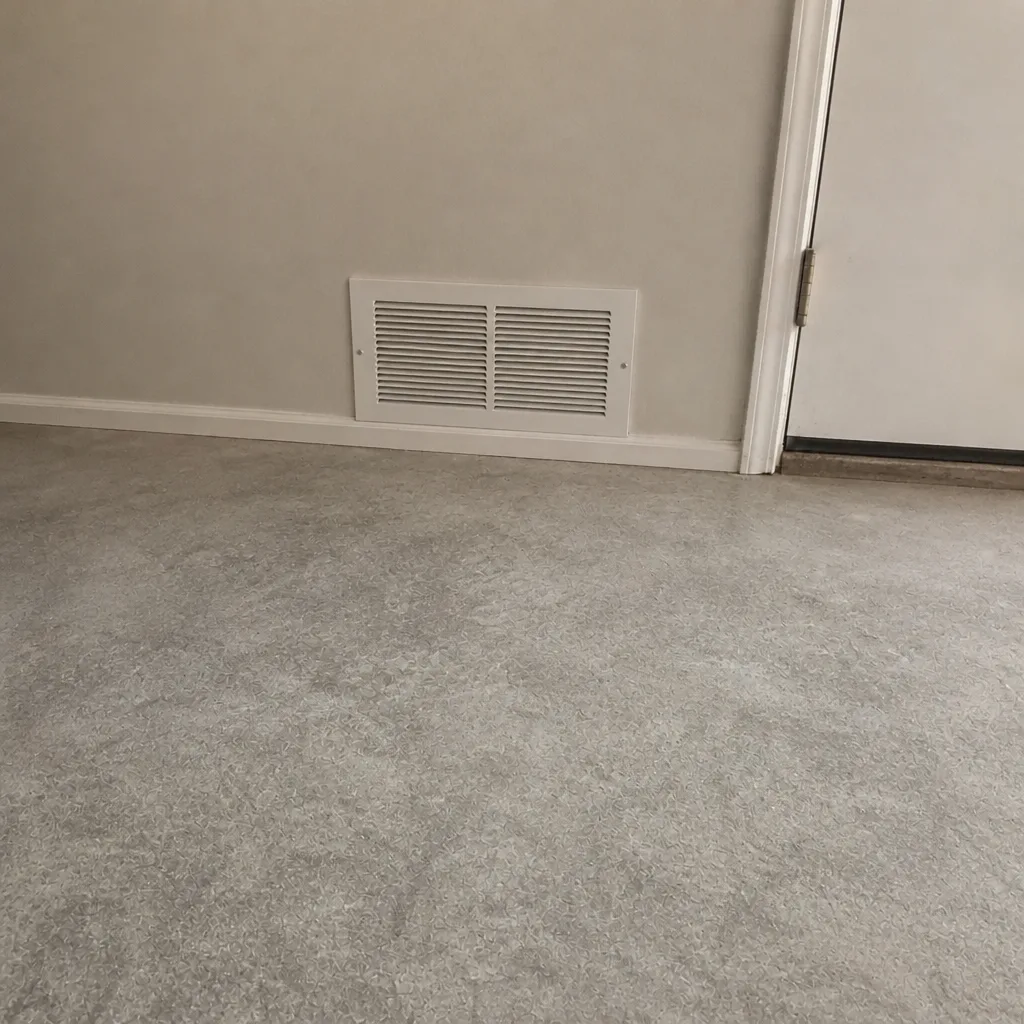 After
When to Call a Professional
Call for a professional assessment if any of the following is true: visible debris on return grilles or supply diffusers; a musty or stale odor when the system first starts; a recent renovation in the home (drywall dust travels); pets in the house and a filter change history that’s inconsistent; or an HVAC system with no duct cleaning history you can confirm. The related work matters too. A dryer that takes two cycles to dry a load, or a motor that’s running longer than it used to, points at a vent problem that no amount of cleaning the ducts will resolve. Air Duct Cleaning Seven Hills offers free estimates in Seven Hills – call (855) 729-0413. We answer 24/7. Fast dispatch from 7am to 7pm, Sunday through Friday. Our technicians have up to 10 years of experience, and the estimate is a written scope with a flat number per system.
Frequently Asked Questions
Whole-system duct cleaning in the Seven Hills market typically falls in the low hundreds to the middle four figures, depending on system size, duct material, the condition of the ducts, and whether coil cleaning, sealing, or sanitizing is bundled in. The written estimate sets the final price, and we quote per system rather than per vent so there’s no surprise number on the invoice. Call (855) 729-0413 for an exact quote – estimates are free.
Cheaper quotes usually leave out containment or branch coverage, which are the two steps that make the job work. A bid built around one vacuum hose and a single register doesn’t establish negative pressure across the system, so dislodged debris recirculates into the house instead of being collected. Ask what HEPA filtration is used on the job and whether before-and-after photos of your own ducts are included. Then compare, not before. Call (855) 729-0413 for an estimate you can compare line by line.
You verify it during the job, not after. Watch the containment setup happen before any agitation begins, ask for before-and-after photos of your own trunk line and several supply branches, and check one register boot with a flashlight after the technician finishes. If any of those checks aren’t offered, ask. Call (855) 729-0413 and we’ll walk you through what a documented clean looks like before you book.
There’s no universal schedule. Most homes with a consistent filter change habit and no pets or recent renovation can go several years between cleanings. Homes with pets, young children, allergy sufferers, or a recent remodel warrant a check sooner, and a Seven Hills home with a long heating season is working the system harder than a lower-altitude one. The right interval comes from an inspection, not a rule of thumb. Call (855) 729-0413 to schedule a free assessment.
It changes what you’ll find inside the ducts. Semi-arid air keeps fine dust suspended longer, so it distributes deeper into the run instead of dropping out near the first supply, and the longer heating season moves more air through the same system each year. Static charge on dry duct walls can make debris cling harder. That’s why rotary agitation matters as much as the vacuum on a Seven Hills job. Call (855) 729-0413 if your house feels dusty again within days of a cleaning.
Duct cleaning covers the ductwork itself, supply and return. HVAC cleaning covers the air handler, blower, and coil inside the system. Dryer vent cleaning is a separate, non-HVAC run from the dryer to the outside wall. They share equipment and habits but they’re separate jobs with separate scopes. We handle all three, plus duct repair and sealing, and the estimate covers whichever combination your home actually needs. Call (855) 729-0413.
It can, if the ducts are the source. If the dust is coming back post-clean, the cause is usually a filtration problem, a leaking boot letting attic or crawlspace air in, or a coil that’s fouled and blowing debris downstream. Cleaning is the first step, and knowing what comes next is why we inspect before we quote. Call (855) 729-0413 to get an honest read on your system.
The Bottom Line
The difference between a duct cleaning that works and one that doesn’t comes down to sequence. Negative pressure first, agitation second, HEPA collection throughout, and every branch covered. That’s what separates a source-removal clean from a cosmetic pass. If you can ask a technician two questions – where does the debris go after it’s dislodged, and will I get photos of my own ducts – you can tell most of the difference before you book a job in Seven Hills. What you can’t verify, you don’t have. For a straightforward walkthrough and a flat written estimate per system on air duct cleaning in Seven Hills, we’re here.
If your boiler and hot water system is due for service, our team also handles boiler repair in Seven Hills.
Contact
Call (855) 729-0413 for a free estimate. We answer 24/7. Fast dispatch from 7am to 7pm, Sunday through Friday. A written, flat scope per system agreed before work starts, before-and-after photos of your own ducts, and a single specialist covering cleaning, dryer vent, HVAC cleaning, duct repair and sealing, and air quality sanitizing. The local pro we connect you with is licensed and insured as Colorado requires. If your system is due, call and let’s take a look.
Written by the team at Air Duct Cleaning Seven Hills.