
Last updated November 24, 2026
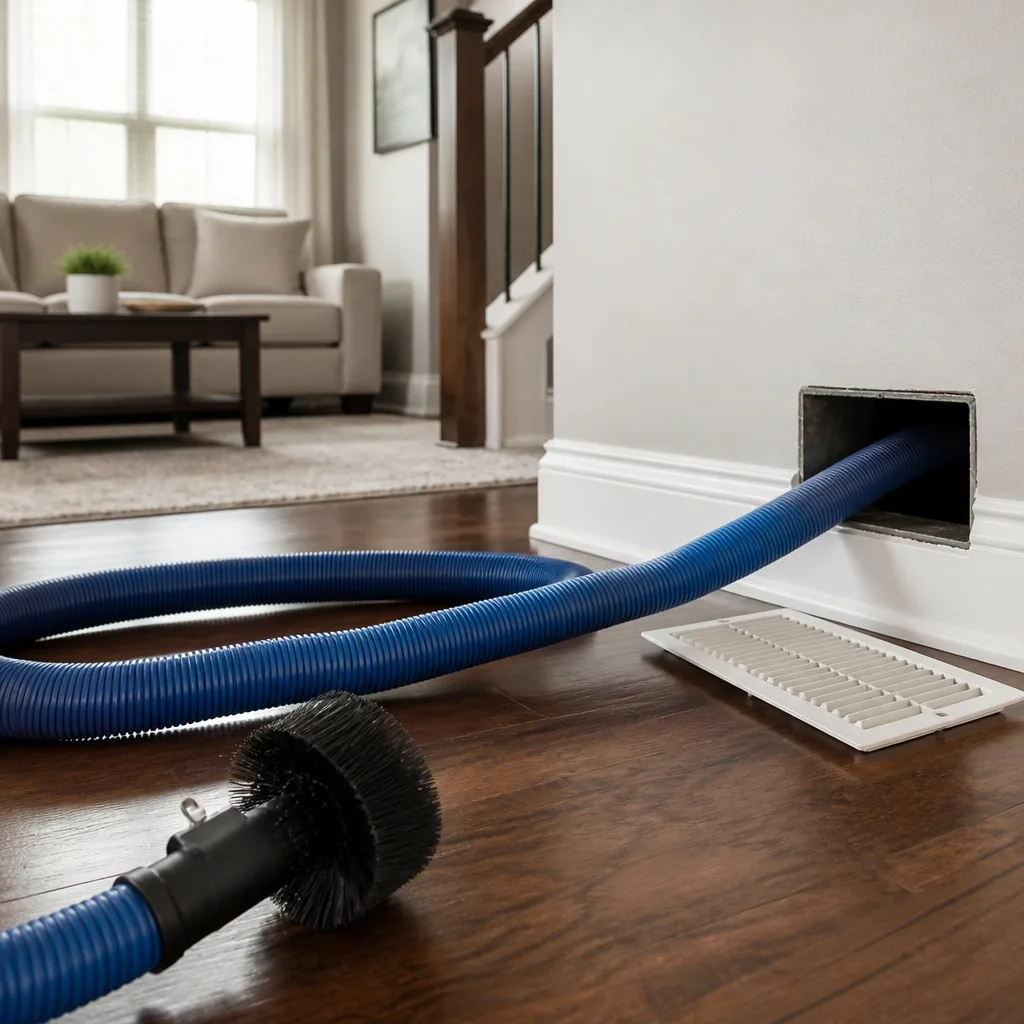 Whole-home duct cleaning
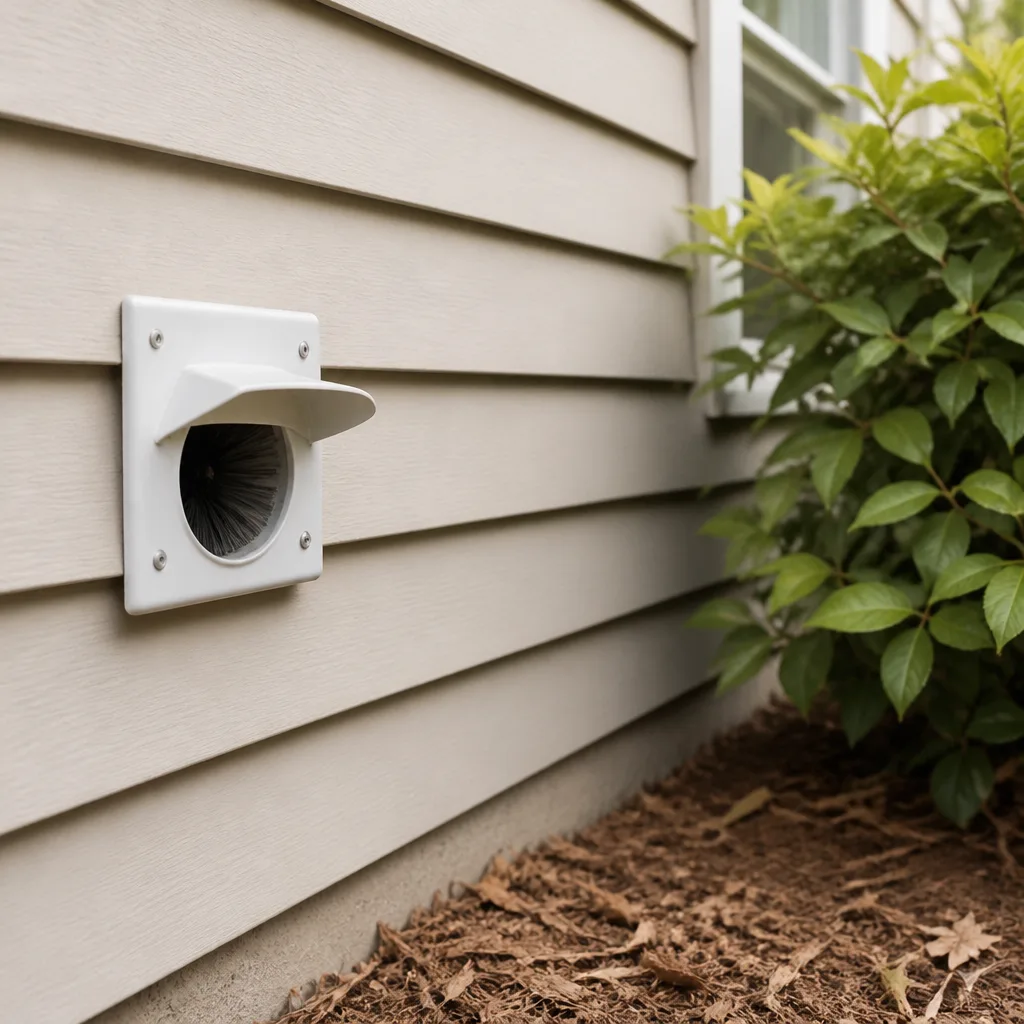 Dryer vent cleaning
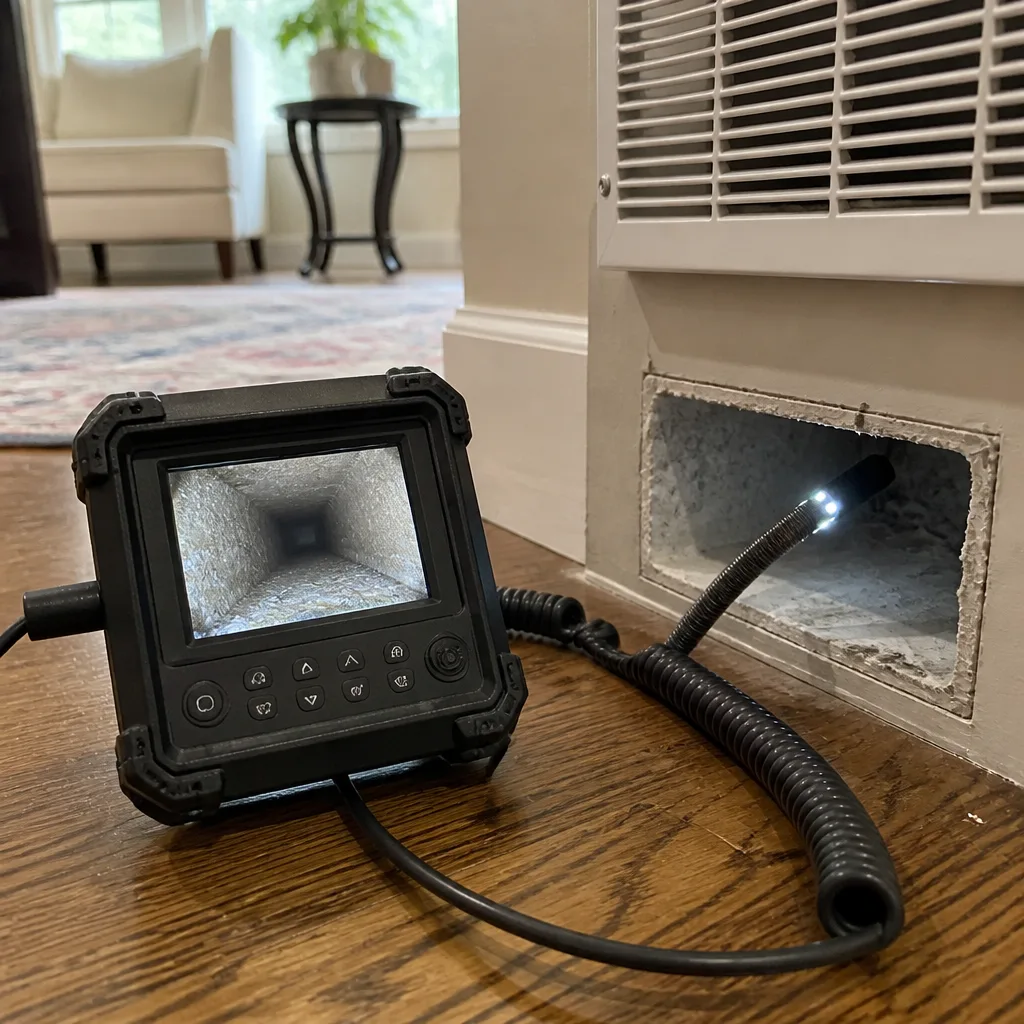 Camera inspection
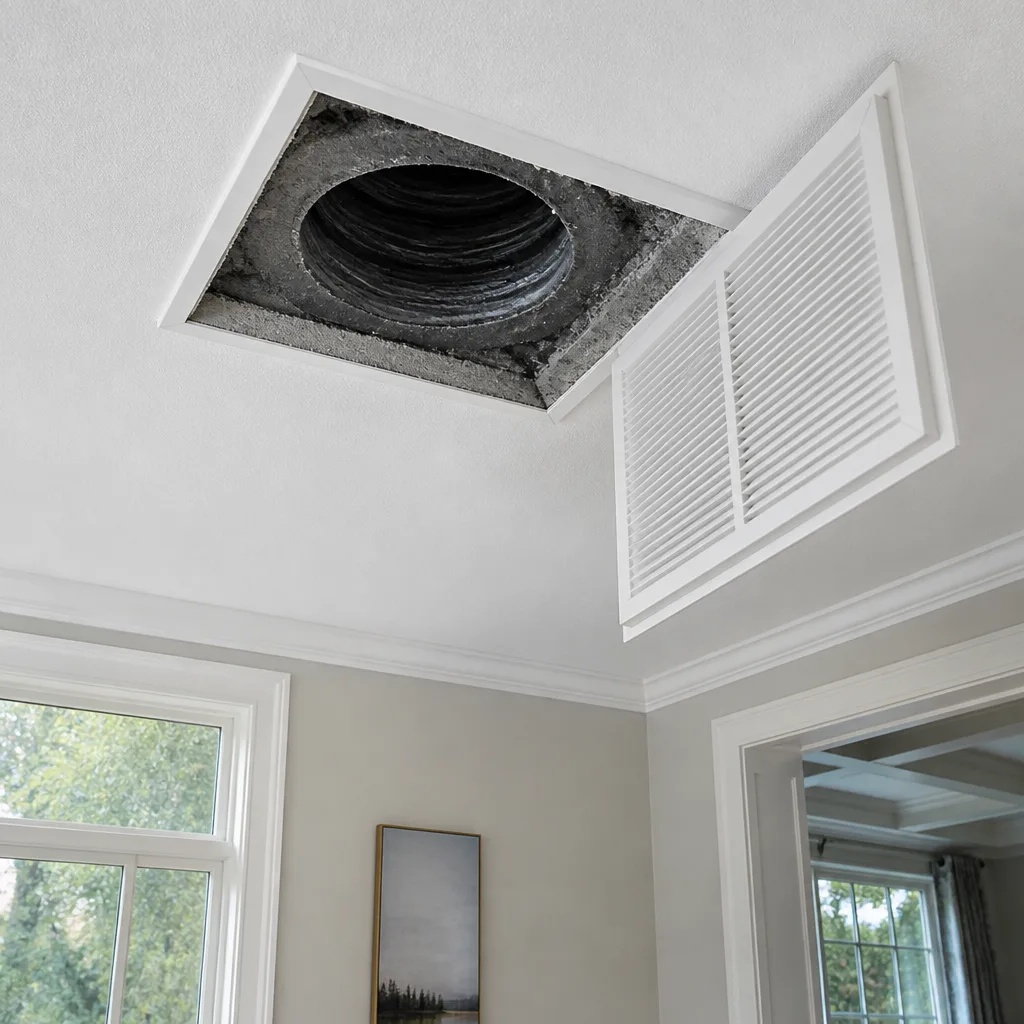 Sanitizing & deodorizing
Whole-system duct and dryer vent check with before-and-after photos - you see exactly what came out of your vents
That "$99 whole-house special" is a bait ad - the real number appears once they are in your hallway, or the "clean" is a shop-vac at the register. We photograph the inside of your ducts before and after instead.
Choosing the Right Air Duct Cleaning Brand: A Buyer’s Guide for Seven Hills
When a contractor mentions brand names like Rotobrush or Nikro in their sales pitch, most homeowners nod politely and assume the names mean the equipment is professional. That assumption is where buying decisions go wrong. Those are not interchangeable badges on the side of a machine. They are distinct equipment platforms built around different mechanical approaches, and the one that fits your home depends on your duct material, your contamination type, and how your system is put together. In a Seven Hills housing stock that mixes original 1970s-era builds with newer remodels, we see both flex duct and rigid galvanized runs in the same neighborhood, and the equipment that cleans one well can be the wrong tool for the other. This guide explains what each brand is actually designed to do, so you can tell whether the equipment on a proposal matches the job you actually need done.
Quick Answer
The right air duct cleaning brand for your Seven Hills home depends on your duct material and contamination level, not on which logo appears on the invoice. Rotobrush systems excel at continuous brush-and-vacuum cleaning of flexible and standard ductwork, while Nikro negative-pressure and HEPA collection systems are built for heavier contamination, source removal, and post-remediation work. Abatement Technologies equipment handles containment and air filtration on jobs where dislodged contaminants need to be captured rather than recirculated. Ask a contractor which platform they’re using and why. The answer tells you whether they matched equipment to your duct system or just bought a machine and built a pitch around it.
Styles & brands we work with
- Whole-home duct cleaning
- Dryer vent cleaning
- Camera inspection
- Sanitizing & deodorizing
Table of Contents
- Why Air Duct Cleaning Brands Matter More Than You Think
- What Rotobrush Systems Are Actually Designed For
- What Nikro Negative-Pressure Systems Bring to the Job
- Abatement Technologies: Containment and Air Filtration Context
- Consumer-Grade vs. Professional-Grade: The Real Mechanical Differences
- How to Ask a Contractor Which Platform They’re Using
- Matching Equipment to Your Seven Hills Home
- Beyond the Machine: What a Complete Job Looks Like
Why Air Duct Cleaning Brands Matter More Than You Think
Air duct cleaning has no single equipment standard. A shop vac with a long hose and a “duct cleaning” sign on the van is, technically, air duct cleaning. So is a truck-mounted negative-pressure system pulling 4,000 CFM through a HEPA filter bank. The results those two setups produce are not in the same category, and the difference shows up in what’s still sitting on the inside of your ducts after the technician leaves.
What makes the brand conversations confusing is that equipment names get thrown around as trust signals in sales pitches. A contractor who says “we use Rotobrush” is telling you something real, but only if the job they’re quoting actually calls for it. Rotobrush is a strong platform for continuous cleaning of flex duct and standard residential runs. It’s not the right call for source removal on a system with heavy contamination, where a negative-pressure setup with HEPA collection does the job more effectively. The brand tells you what a machine is built for, not whether it fits your home.
In our experience working Seven Hills homes, this matters most when a contractor quotes the same flat package to every customer. Seven Hills has a real mix of duct ages and duct types. A 1970s ranch with original galvanized trunk and flex branches has different cleaning needs than a remodeled home with newer flex everywhere. When the equipment selection doesn’t shift with the duct system, you know the proposal was templated before anyone looked at anything.
What you’re really buying is a matched system: the right machine, the right method, and a technician who can explain why that combination works for your specific ductwork. That’s the bar. Anything below it is a price negotiation, not a service decision.
What Rotobrush Systems Are Actually Designed For
Rotobrush systems are built around a single mechanical idea: continuous brush-and-vacuum cleaning in one tool. An air-driven brush head spins inside the duct, loosening debris off the duct walls, while a vacuum pulls that debris back toward the collection unit. The brush and the vacuum work together in real time, which is the point. Older approaches used a stand-alone brush, then a separate vacuum pass. Rotobrush put them in one pass.
That design is especially well suited to two conditions:
- Flex duct in residential systems. Flex duct has a corrugated interior that catches and traps debris in the ridges. A rotating brush is far more effective at disturbing that trapped material than air pressure alone, because air tends to skip past the pockets where the ridges hold debris.
- Cleaning the length of a run in one continuous motion. On long branch runs, the brush-and-vacuum stays engaged through the whole duct rather than stopping and restarting at intervals, which keeps the loosened material moving toward the collection point.
Where Rotobrush systems are the wrong choice is on jobs with heavy contamination or post-remediation cleaning, where the primary need is source removal under sustained negative pressure. Rotobrush machines can be paired with HEPA-capable collection, but the platform’s core strength is mechanical disturbance of duct walls. If your system has mold growth, smoke residue from a fire, or rodent contamination, you want a negative-pressure platform as the primary method, with brush agitation as a supporting tool. A contractor pitching Rotobrush as the answer to every job is telling you they’ve committed to one platform rather than matched equipment to condition.
One more thing to know: Rotobrush equipment has genuine consumer-adjacent versions and professional-grade versions. The professional systems are what remediation and restoration contractors use, with heavier motor assemblies and larger collection capacity. If a proposal mentions Rotobrush, it’s worth asking which model, and whether the collection unit is HEPA-rated. That question alone separates a serious operator from someone with a marketing budget.
What Nikro Negative-Pressure Systems Bring to the Job
Nikro negative-pressure systems are built on a different mechanical premise. Rather than cleaning the duct walls with an intruding brush, they place the entire duct system under negative pressure and pull contaminants out to a collection unit. High-CFM vacuum pulls a large volume of air through the ductwork, lifting loose debris and carrying it into HEPA-rated filtration where it’s trapped. The whole duct run is the cleaning chamber, and the collection unit is doing the containment work.
Nikro systems are the standard choice in three situations:
- Heavy contamination. When the debris volume is high, negative pressure moves it out efficiently without relying on a brush to reach every surface.
- Post-remediation cleaning. After mold remediation, fire and smoke restoration, or pest remediation, the goal is removing residual particulate that brush agitation can reintroduce into living space. Negative-pressure extraction is the method that keeps pace with the containment requirement.
- Large or complex duct systems. On multi-trunk systems with many branches, negative pressure at the air handler pulls through the whole network, then individual branches get worked in sequence.
The phrase “HEPA-rated collection” matters here. HEPA filtration captures particles down to the level serious remediation work requires, and it’s the difference between pulling contaminants out of the duct system and redistributing them into the air your family breathes. A negative-pressure system without HEPA-rated collection is half a system. Ask about the collection unit specifically, not just the vacuum.
Where negative-pressure systems are less ideal is on lightweight flex duct runs common in Seven Hills homes, where aggressive high-CFM airflow can stress the duct material. That’s where the matched-system question earns its keep: the right contractor chooses between platforms rather than committing to one.
Abatement Technologies: Containment and Air Filtration Context
Abatement Technologies sits in a slightly different category than Rotobrush or Nikro. Where those are duct cleaning platforms, Abatement Technologies is a name that shows up in serious containment and air filtration work: mold remediation, water damage restoration, and smoke damage cleanup. Their equipment includes HEPA air scrubbers, negative air machines, and containment systems built to hold contaminated air inside a defined work area while contaminants are removed.
If a contractor proposes Abatement Technologies equipment on a duct cleaning job, what they’re saying is that they’re building a containment layer around the work. That’s a good signal on three kinds of jobs:
- Any job where active mold growth is present in the duct system, where releasing spores during cleaning would be a real indoor air quality problem.
- Smoke damage cleanup following a fire, where soot residue in the ducts will go airborne during cleaning if not contained.
- Post-remediation verification cleaning, where the duct system is being cleaned after remediation work has already been completed and the goal is removing residual particulate.
Abatement Technologies equipment deployed on a routine cleaning job is not a red flag on its own. It’s a stronger job than one without containment. The DUCT cleaning tasks themselves are performed by Rotobrush or Nikro equipment, with Abatement scrubbers and negative air machines keeping the surrounding air clean during the work. The combination is what a genuinely professional job tends to look like.
For homeowners in Seven Hills with allergy concerns, pets, or young children, this containment layer is the practical difference between a cleaning that helps and a cleaning that leaves the house feeling worse for a day or two. Abatement-equipment containment captures dislodged contaminants rather than recirculating them into living space.
Consumer-Grade vs. Professional-Grade: The Real Mechanical Differences
The gap between a professional duct cleaning system and consumer or entry-level equipment is not a marketing claim. It’s measurable in three mechanical specifications:
- Motor CFM and vacuum performance. Professional negative-pressure systems pull air volumes several times greater than consumer vacuums, which is what makes them effective at source removal from a long duct run. A shop vac pulls enough airflow to clean a small area of duct near the wand, then falls off the further the wand gets from the collection point.
- Brush diameter and construction. Professional brush systems are sized to the duct diameter and built to maintain contact pressure against the duct wall through the length of a run. Consumer brush attachments are smaller, softer, and prone to losing contact as the run gets longer or bends.
- HEPA-rated filtration on the collection unit. This is the single most important spec. A professional system captures the particulate it dislodges through HEPA filtration. A consumer unit without HEPA filtration exhausts much of what it pulls back into the room.
We use equipment from Rotobrush, Nikro, and Abatement Technologies because those are the platforms remediation and restoration contractors rely on. The mechanical differences are the reason: higher CFM through the collection unit, brush systems matched to the duct diameter, and HEPA-rated filtration on the exhaust side. A consumer vacuum with a long hose can’t replicate those specs no matter how the job is priced.
What that means in practice for a Seven Hills homeowner: the question to ask isn’t “do you have professional equipment?” Every contractor will say yes. The question is “which platform, what CFM, is the collection unit HEPA-rated, and why is that the right setup for my ducts?” The answer is diagnostic. A contractor who can walk through those specs and connect them to your duct system is operating at a professional level. One who can’t isn’t, regardless of the brand name on the van.
How to Ask a Contractor Which Platform They’re Using
The single most useful question in this entire category of home service is: “Which equipment platform are you using, and why is that the right one for my ducts?” Here’s how to work through the answer, and what a good one looks like compared to a poor one.
- Ask for the platform by name. Rotobrush, Nikro, Abatement Technologies, or another pro-grade brand. “Professional-grade equipment” without a name is not an answer. Every contractor claims professional-grade. Brand-specific answers show whether they’ve actually selected equipment or just bought what a distributor recommended.
- Ask why that platform fits your duct material. If your home has flex duct, you want a brush-and-vacuum platform as the primary method. If you have rigid galvanized duct, negative pressure often performs better. If the answer doesn’t shift based on your duct type, they’re not matching.
- Ask about the collection unit’s HEPA rating. This is the containment spec. If the collection unit isn’t HEPA-rated, a meaningful portion of the dislodged debris gets exhausted back into the return-air path. Ask directly and listen for a clear answer.
- Ask about containment. On any job with visible contamination, mold, or smoke residue, a serious contractor deploys negative air machines and HEPA scrubbers to keep the work area contained. Abatement Technologies equipment is one of the ways that gets done.
- Ask what happens if they find damaged duct. Cleaning exposes problems: seam separation, crushed flex duct, disconnected runs. A specialist contractor can repair and seal what cleaning turns up. A generalist hands you an estimate for a second contractor visit and leaves the ducts compromised.
A contractor who can answer all five of these on the spot is worth talking to further. One who deflects to discount pricing, “trust me, we’ve been doing this for years,” or an “average price” without specifics is telling you they’ve built their business around volume, not craft.
Matching Equipment to Your Seven Hills Home
Seven Hills has a housing mix that keeps equipment selection honest. There are neighborhoods with original 1970s construction, where duct systems are often rigid galvanized with flex branches, and the systems have been through one or two HVAC replacements. There are newer builds and remodels where flex duct dominates and the runs are shorter. There are also properties where additions and basement finish-outs have introduced duct runs that don’t always follow a clean layout. Each of those cases calls for a slightly different combination of equipment and method.
A few things we look at when matching equipment to a Seven Hills home:
- Duct material by run. Rigid galvanized runs reward negative-pressure extraction. Flex runs reward brush-and-vacuum. Most Seven Hills systems have both, so the job usually involves both methods in sequence.
- Duct age and condition. Older flex duct cracks and separates at fittings. Older rigid duct develops seam gaps. Cleaning exposes those, which is why a specialist needs to be able to repair and seal, not just clean.
- Contamination type. Routine dust accumulation is a different job from mold growth, smoke residue, or pest contamination. The first is a brush-and-vacuum job with containment. The second is a source-removal job under negative pressure with HEPA collection.
- Dryer vent. Dryer vent cleaning is a separate line of work from air duct cleaning, and generalist duct companies often skip it. It addresses a fire risk rather than an air quality one, but it’s a natural add-on to any full-system cleaning visit.
- Air quality add-ons. After cleaning, filtration and humidity-control components like those from Honeywell and Aprilaire support ongoing air quality. Guardsman-grade sanitizing treatments can be applied to cleaned duct interiors where the situation calls for it.
What you’re looking for from a contractor is a walk-through that matches this list. They should tell you how much flex duct and how much rigid duct is in your system, what condition each is in, what the contamination type looks like, and what equipment combination they’re recommending. If that conversation doesn’t happen, the equipment choice doesn’t matter, because there wasn’t one. For a deeper dive into what a full-system cleaning covers, see air duct cleaning.
Beyond the Machine: What a Complete Job Looks Like
Equipment is the foundation, but a complete job involves more than the machine. Here’s what a proper full-system cleaning looks like from a specialist’s perspective, and what separates it from a partial one.
A complete job starts with an inspection. Before anything is touched, a technician should look at the duct system, check the air handler and coil, test the return-air path, and confirm what’s actually in the ducts. That inspection sets the method. Then it’s a sequence:
- Containment goes up first. Negative air machines and HEPA scrubbers hold the work area under control for the duration of the job.
- The main trunk and air handler get cleaned. Negative pressure pulls through the trunk line, then individual branches are worked.
- Branches get cleaned with the matched method. Brush-and-vacuum on flex, negative-pressure extraction on rigid, in the order that keeps the system under control.
- Repairs and sealing address what cleaning exposes. Seam separation, disconnected runs, crushed flex duct – fixed and sealed before the job closes.
- Air quality treatment is applied if warranted. Guardsman-grade sanitizing on cleaned duct interiors; Honeywell or Aprilaire filtration components added where ongoing air quality improvement is the goal.
- Dryer vent gets addressed in the same visit. The dryer vent is a separate system, but it belongs in the same conversation, because a clogged dryer vent is a fire risk independent of the air duct system.
What a complete job delivers is a system where the ducts are clean, sealed, and supported by the air quality components that make sense for the home. That’s the difference between a cleaning service and a working air system. It’s worth more than the price difference on the invoice, because partial cleans tend to come back around. A duct cleaning that leaves compromised duct and no repair path in place is a cleaning that needs repeating. If you’re dealing with a duct system that needs a full look, our hvac cleaning service covers the air handler and coil as well as the ducts themselves. And if the dryer vent hasn’t been checked in a while, dryer vent cleaning is a separate service that goes with any full-system visit.
Common Mistakes to Avoid
- Choosing on price alone. The cheapest quote in Seven Hills usually means a smaller vacuum, no HEPA collection, and no containment. You’re not getting the same job for less money. You’re getting a different job.
- Believing “professional equipment” without a name. Every contractor says it. Brand-specific answers are the only real signal, because they show whether the platform was actually selected for your duct system or bought as a default.
- Not asking about the collection unit’s HEPA rating. This is the containment spec. Skip the question and you can’t tell whether the dirt is being removed or recirculated.
- Assuming a cleaning covers repairs. Cleaning exposes damage. If the contractor can’t repair and seal what the cleaning turns up, you’re left with compromised ducts and a second round of phone calls.
- Forgetting the dryer vent. It’s not an air quality issue, but it is a fire risk. Generalist duct companies skip it; a specialist handles it in the same visit.
- Skipping the walk-through. A contractor who quotes before looking at your ductwork is quoting a template. Flex duct and rigid duct in the same house need different treatment, and only an inspection reveals which is which.
- Ignoring air quality components after cleaning. Cleaning removes what’s there today. Filtration and humidity control components keep it from coming back. Aprilaire and Honeywell components are a natural next step on homes with ongoing allergy, pet, or humidity concerns.
See the difference
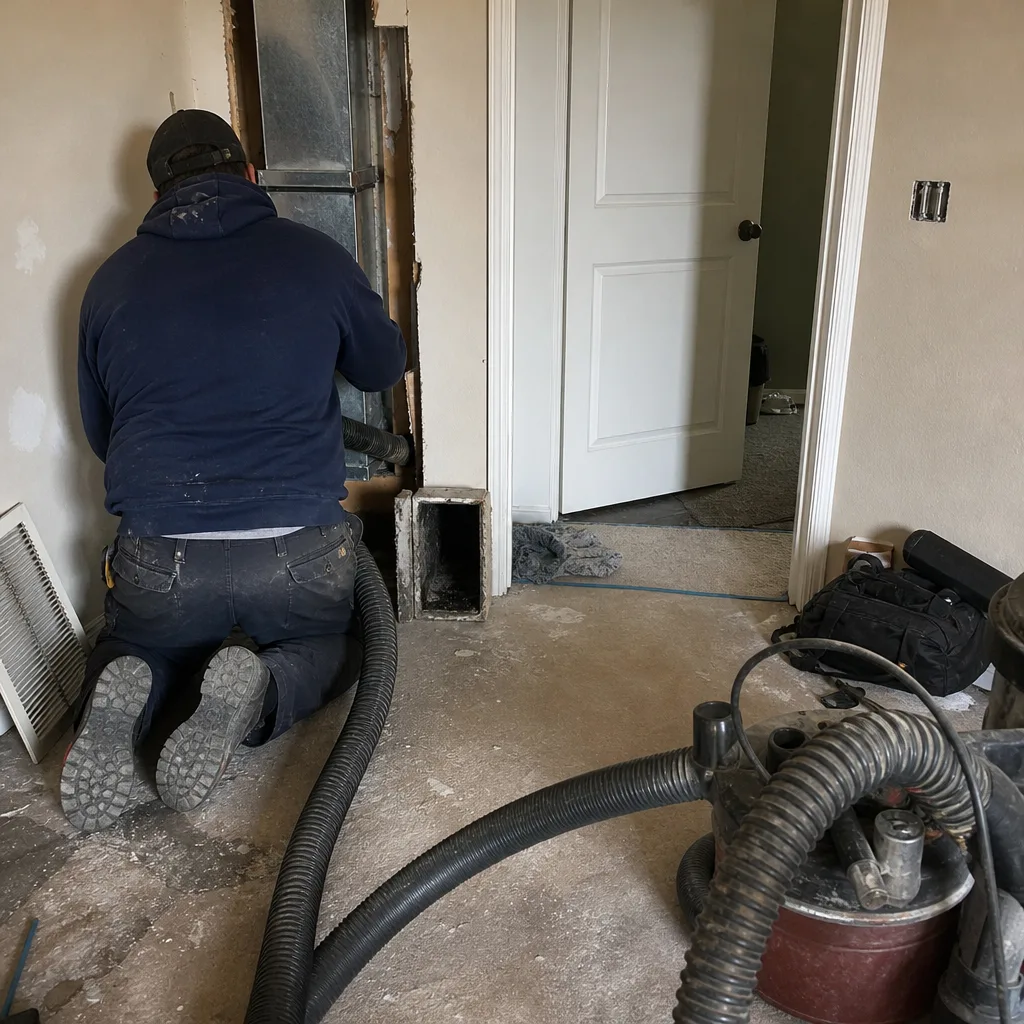 Before
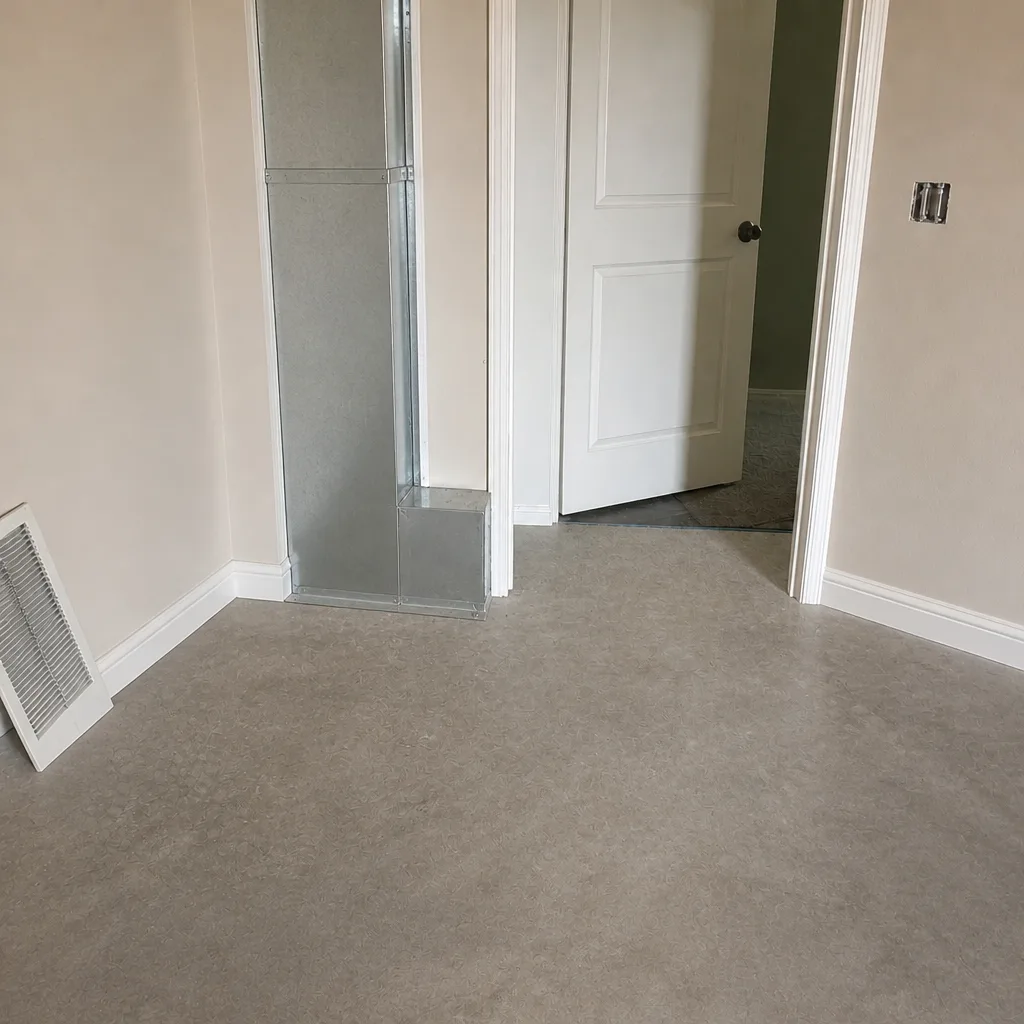 After
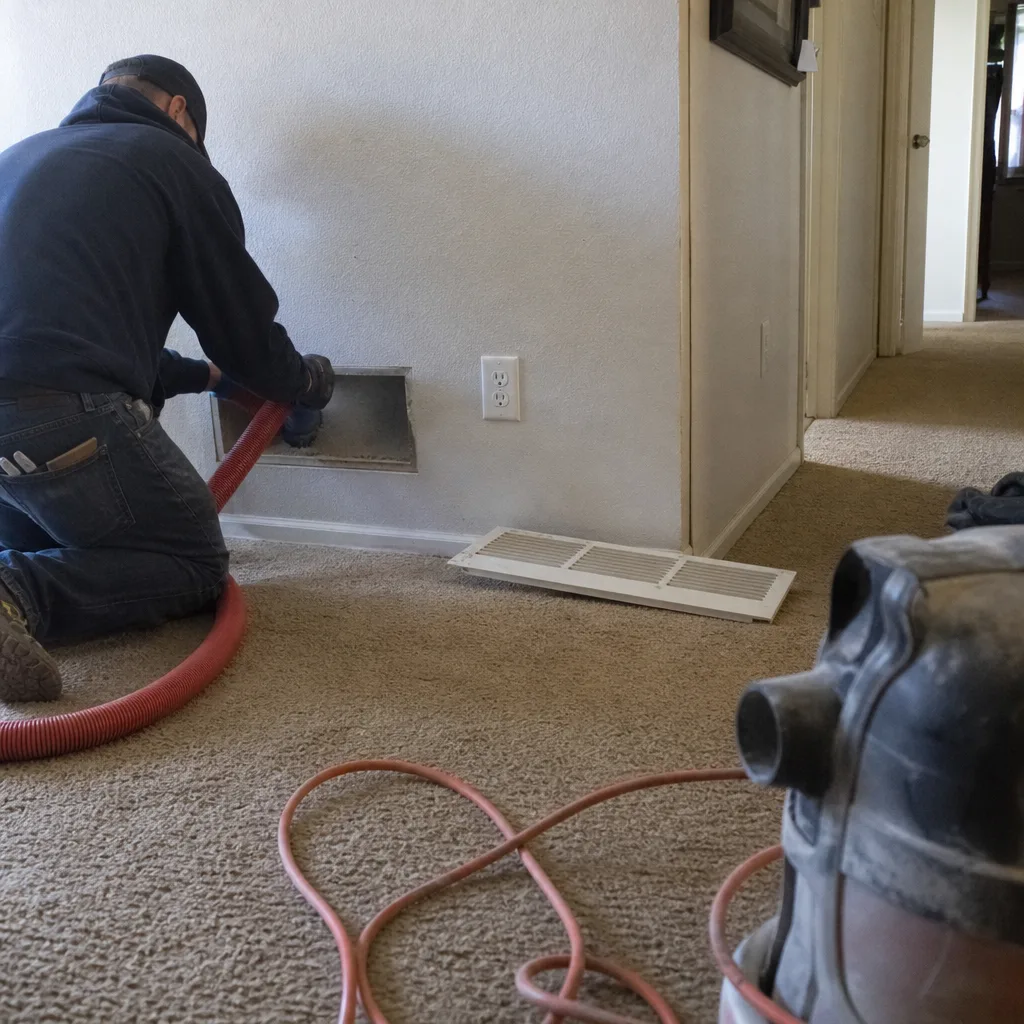 Before
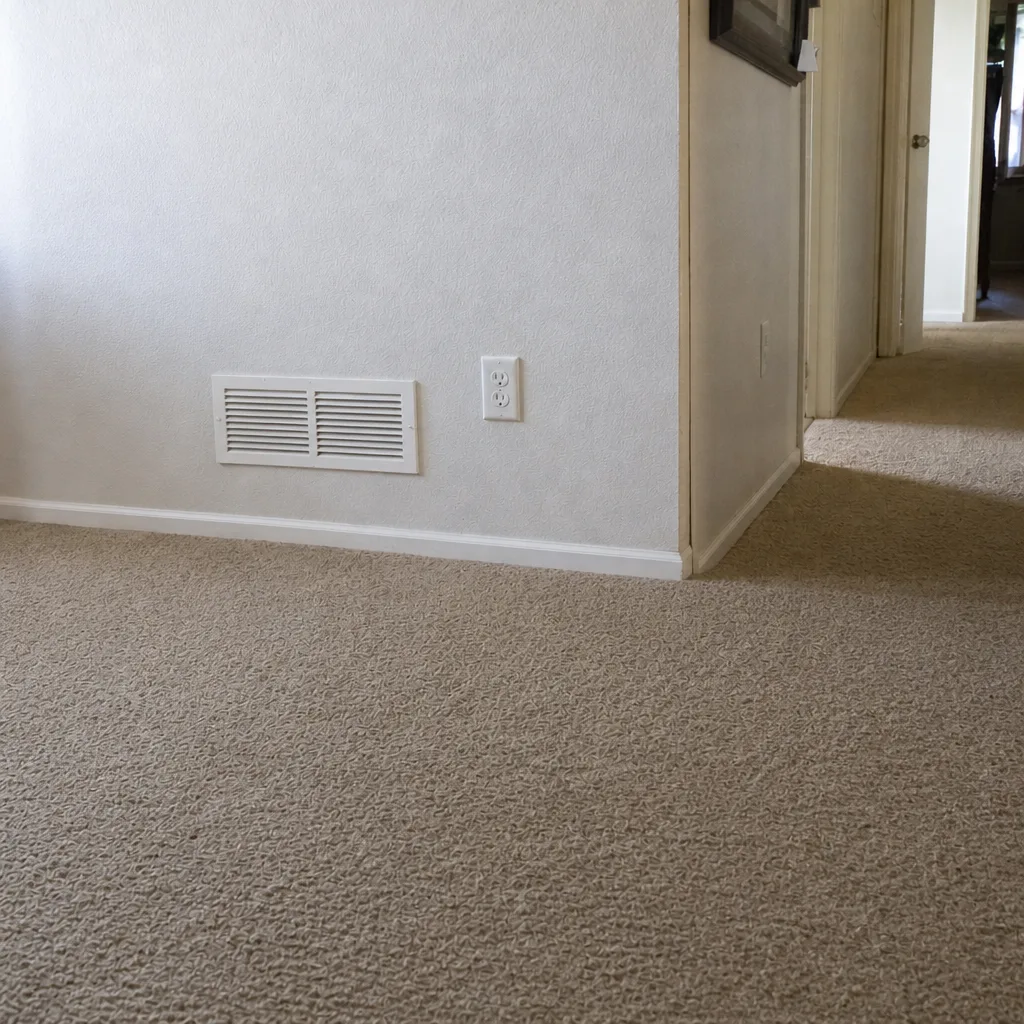 After
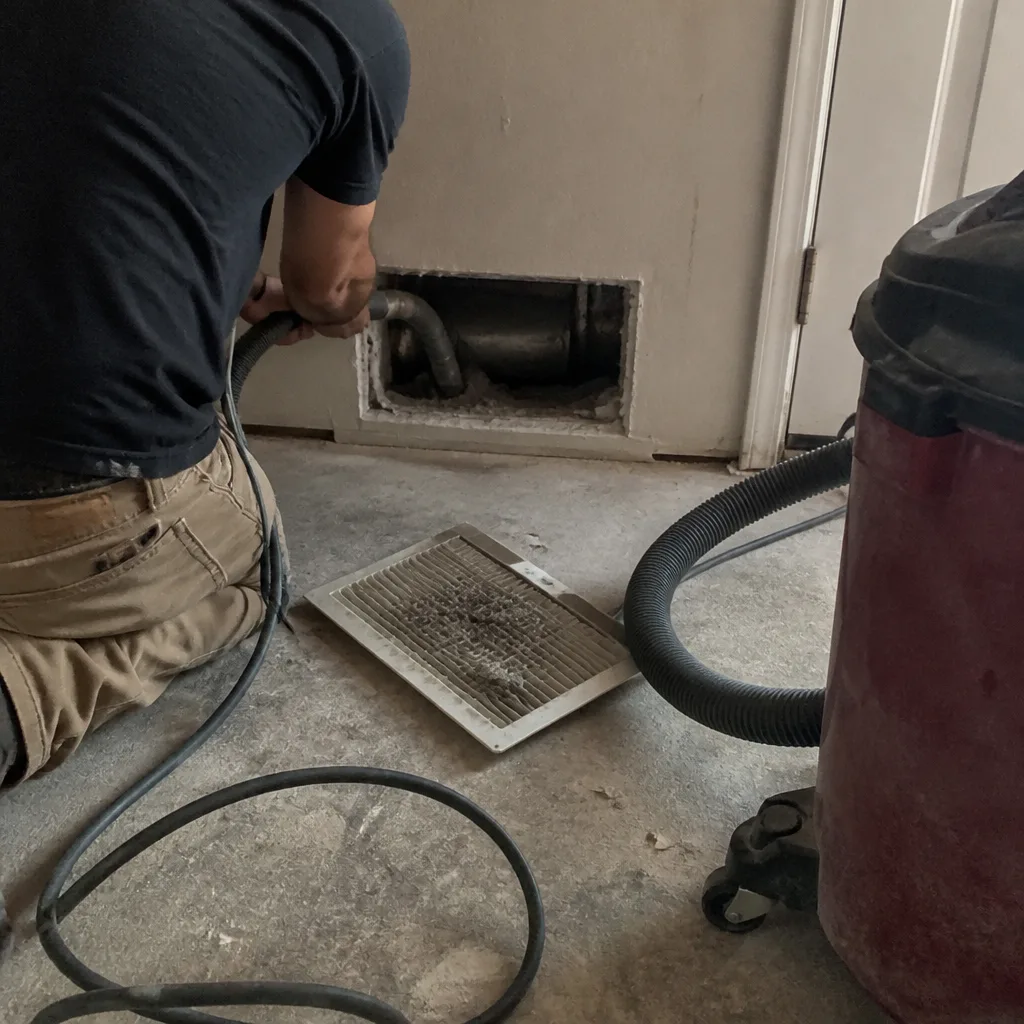 Before
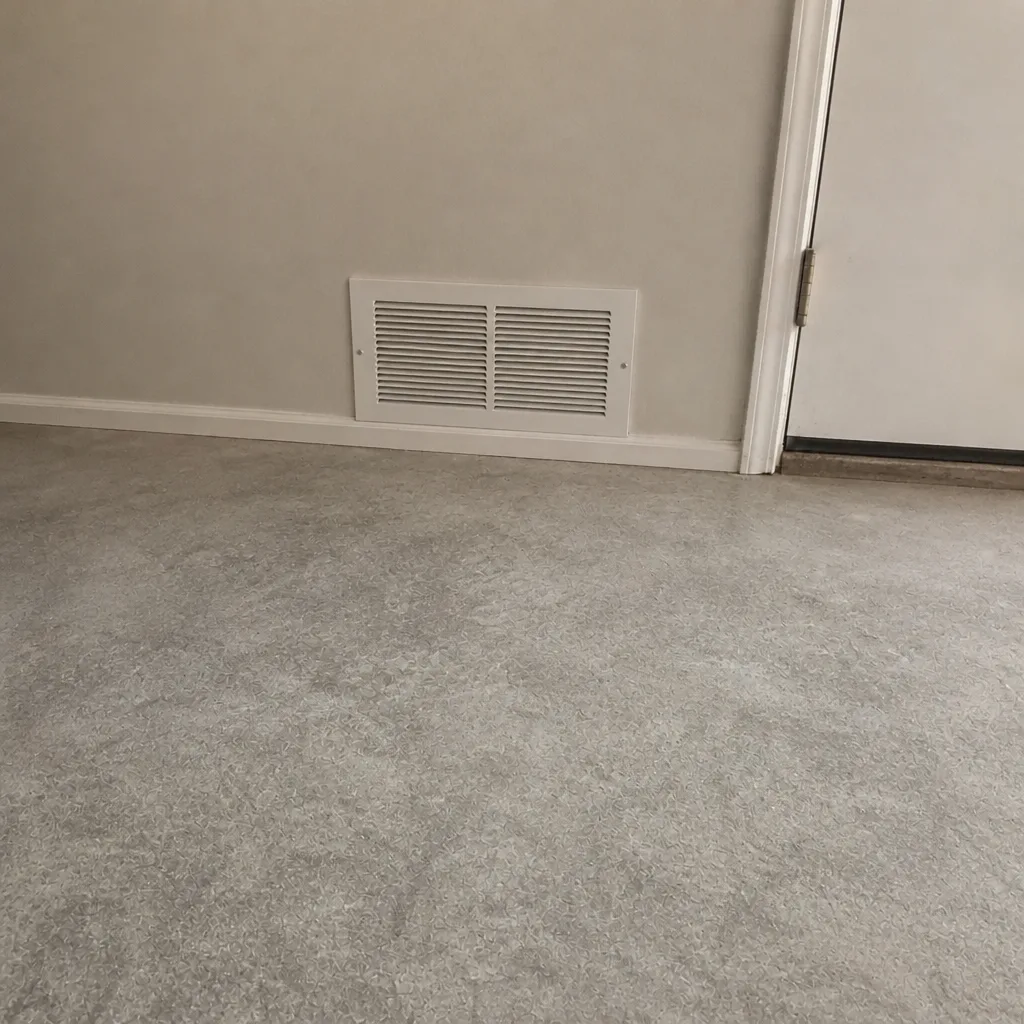 After
When to Call a Professional
Some duct conditions call for a professional sooner rather than later. Visible dust blowing out of supply registers right after the HVAC kicks on is a sign the ducts are past due. A musty odor from the vents, especially in the warmer months when the system runs more, points to moisture or mold growth in the duct interior that brush cleaning alone won’t resolve. Unexplained increases in allergy symptoms or dust buildup on surfaces the HVAC serves, particularly where family members or pets are affected, are reasons to have the system looked at. Unexplained reduced airflow at some registers but not others often means a disconnected or crushed duct run, which is a repair problem, not just a cleaning problem. Dryer vents that take multiple cycles to dry a load or feel hot to the touch are a fire risk that needs attention. In any of these cases, a professional with the right equipment can diagnose what’s happening and confirm what’s actually needed. Air Duct Cleaning Seven Hills offers free estimates in Seven Hills, so call (855) 729-0413 for a walk-through. We answer 24/7, with fast dispatch from 7am to 7pm, Sunday through Friday.
Frequently Asked Questions
The price for a full-system cleaning depends on duct size, number of runs, contamination level, and whether repairs or air quality components are included, and every job is priced per the written estimate after an inspection. Consumer-grade and professional-grade jobs are not priced the same because they are not the same service. Call (855) 729-0413 for an exact quote; estimates are free.
Because they’re often not the same job. A low quote usually reflects a smaller vacuum, no HEPA-rated collection unit, no containment during cleaning, and no repair path if damage is found. The mechanical specs (CFM, brush system, HEPA filtration) are what drive the real cost of the job, and they’re also what drive the difference in result. Call (855) 729-0413 for an exact quote; estimates are free.
Ask for before-and-after photos of your own ducts, taken during the cleaning, and ask what the technician is checking for at each stage of the job. A serious contractor will gladly provide both. If the answer to either question is vague, that tells you something. Call (855) 729-0413 for an exact quote; estimates are free.
For most homes in Seven Hills, a professional full-system cleaning every few years is reasonable, but the actual interval depends on duct condition, pet and family situation, recent renovations, and whether the HVAC has been replaced. Homes with pets, allergy sufferers, or recent remodeling tend to need more frequent attention; homes with routine conditions can go longer. Call (855) 729-0413 for an exact quote; estimates are free.
Rotobrush systems combine a rotating brush and vacuum in a single tool, so debris dislodged from the duct wall is pulled into collection in real time rather than left floating or settling. The brush is sized to the duct diameter and the collection unit is built for professional-grade filtration, neither of which a general-purpose vacuum replicates. The result is a cleaning that reaches flex duct ridges and holds debris under control through the length of the run.
No, but its presence on a proposal is a useful signal. Abatement Technologies equipment shows up on jobs where containment and air filtration matter: mold remediation, smoke damage, and post-remediation cleaning. On a routine dust-removal job, a strong Rotobrush or Nikro platform with proper collection may be all that’s needed. On a job with active contamination, the containment layer is worth asking about specifically. Call (855) 729-0413 for an exact quote; estimates are free.
The main one is duct age and material. Homes built in the 1970s and renovated since often have a mix of original rigid galvanized trunk and newer flex branches, which calls for a matched equipment approach rather than a one-platform job. Additions and basement finish-outs sometimes introduce flex runs that are routed unusually or loosely supported, both of which cleaning exposes. A walk-through before the estimate catches all of this.
The Bottom Line
Equipment names in a duct cleaning proposal are not interchangeable badges. Rotobrush is built for continuous brush-and-vacuum cleaning, well suited to flex duct and standard residential runs. Nikro’s negative-pressure systems are the right call on heavy contamination, post-remediation work, and larger systems. Abatement Technologies equipment adds containment on jobs where contaminants need to be captured, not recirculated. The right contractor matches the platform to your duct material and contamination type, then explains why. In Seven Hills, where original construction and newer remodels sit side by side, that matching job is the single strongest signal of whether the company you’re considering is serious about the craft or just serious about the pitch. Start with the questions. The answers tell you everything.
Contact Us for an Honest Equipment Walk-Through
If you’ve read this far and you’re still not sure which equipment your home actually needs, that’s the right place to start. A walk-through before the estimate tells you what’s in your duct system, what condition it’s in, and what method fits the conditions. Air Duct Cleaning Seven Hills offers Air Duct Cleaning Seven Hills with a full equipment explanation on every estimate, no templated packages and no generic brand names without a reason. Call (855) 729-0413 to schedule a free estimate. We answer 24/7, with fast dispatch from 7am to 7pm, Sunday through Friday.
Written by the team at Air Duct Cleaning Seven Hills.